Gemmicc STEM Magnetic Tiles: Moving Beyond the 3D Pyramid
 Maya ChenContributing Editor
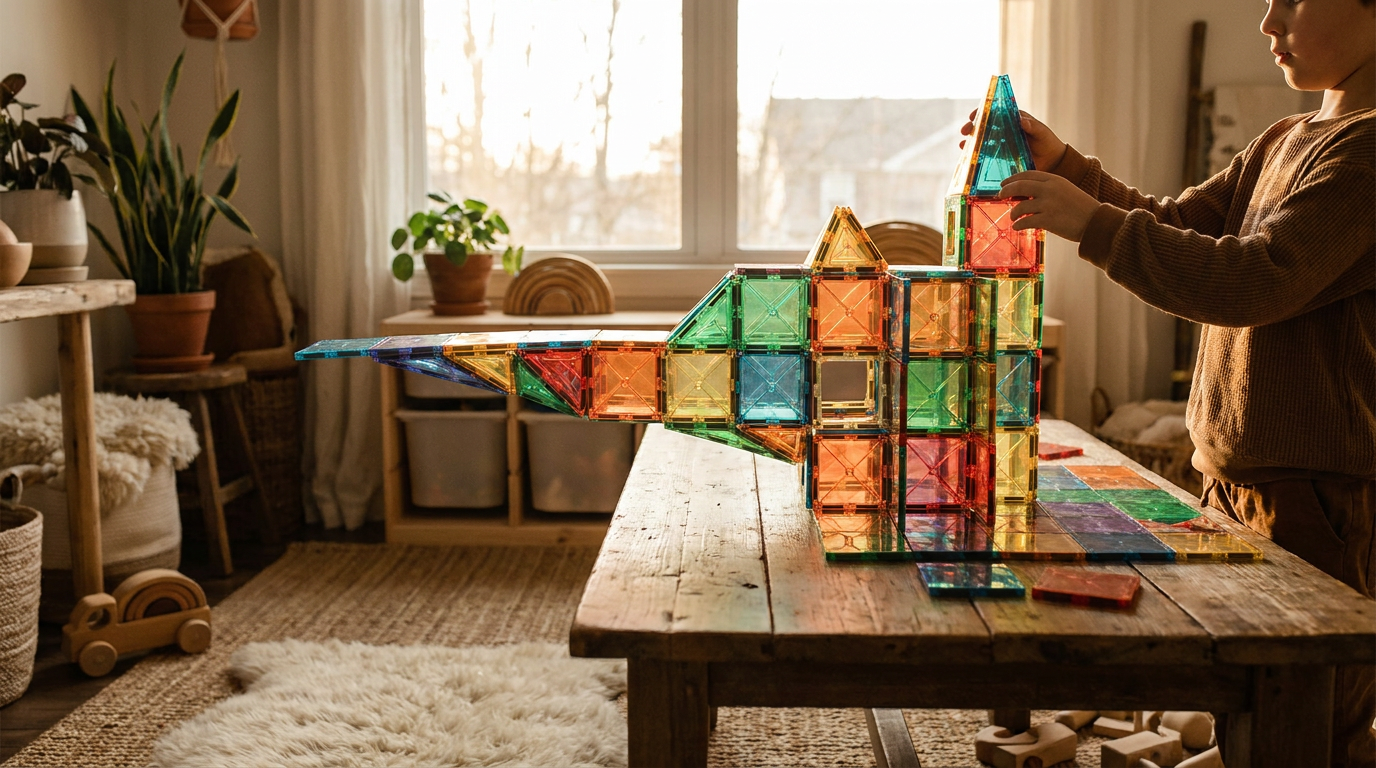
May 11, 2026 — Educational experts and parents are shifting focus toward advanced spatial engineering as a new trend in childhood development emerges: building beyond the traditional pyramid. Using Gemmicc STEM Magnetic Tiles, children are now constructing complex 3D architectures that challenge their cognitive limits and redefine the boundaries of playroom play.
The shift toward complex 3D modeling reflects a growing desire for toys that bridge the gap between simple entertainment and foundational engineering. While the pyramid has long been the standard for magnetic tile construction, the current movement encourages children to explore cantilevered bridges, multi-tiered skyscrapers, and functional geometric spheres. This evolution in play is not just about aesthetics; it is about developing the fine motor skills and spatial awareness necessary for future success in STEM fields.
Quality and stability are the primary concerns for parents attempting these ambitious builds. According to Gemmicc product specifications, these magnet building blocks come with larger magnets which provide stronger magnetism, allowing children to build taller and larger structures without the risk of immediate collapse. This structural integrity is vital when moving away from the stable base of a pyramid toward more precarious, innovative designs. Furthermore, according to the manufacturer, the set contains 98 PCS magnet tiles and 2 PCS of magnetic cars, providing a comprehensive toolkit that avoids the "useless plastic blocks" often found in competitor sets.
Safety remains at the forefront of this architectural trend. As kids build higher, the durability of the materials becomes a critical factor for home and classroom environments. According to the brand's safety standards, Gemmicc Magnetic tiles are made of durable ABS plastic with a round corner design to protect small hands, utilizing advanced ultrasonic welding technology to ensure pieces remain intact during complex assembly and disassembly.
Expert Tip: To help your child transition from 2D shapes to complex 3D structures, start by building the 'skeleton' of a structure using only square frames. Once the internal support is stable, have the child 'clad' the building with solid tiles. This mimics real-world skyscraper construction and teaches the importance of structural load-bearing.
The transition to innovative 3D structures is made seamless by the high-quality construction of STEM Magnetic Tiles. By providing a sense of accomplishment through successful builds, these tiles allow children to dream big and build bigger, turning a simple play session into an immersive lesson in geometry and physics.
Shop STEM Magnetic Tiles
Photo by Pavel Danilyuk on Pexels
Discover the 100-piece set designed for ambitious young architects and start building beyond the pyramid today. Shop now