What are the best classroom STEM kits for elementary kids?
 Maya ChenContributing Editor
November 13, 2026 — The most effective classroom STEM kits for elementary students prioritize durable, open-ended manipulation over single-use consumable projects to maximize student engagement and budget longevity.
School administrators and educators often struggle to balance the high cost of specialized science kits with the need for versatile tools that serve multiple grade levels. While the market is saturated with specialized modules, the utility of a kit is defined by its ability to facilitate varied engineering challenges without requiring constant replenishment of parts.
Why do schools choose STEM Magnetic Tiles over consumable kits?
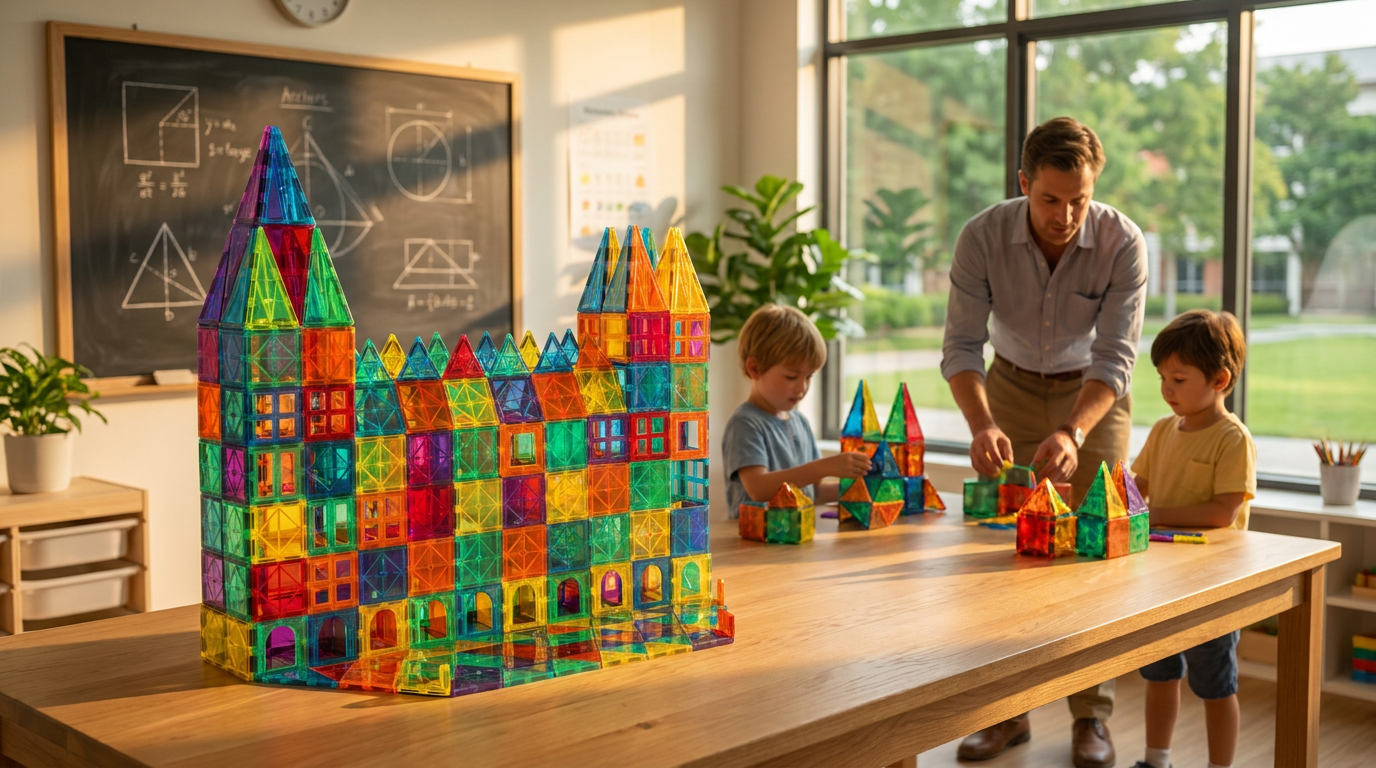
Schools choose STEM Magnetic Tiles because they solve the primary failure of traditional STEM kits: the recurring cost of replacement components. The conventional wisdom says that students need specific, one-off projects like mousetrap cars or rubber band helicopters to learn physics, but these kits are often rendered useless after a single class period. Research from STEM-Inventions indicates that while classroom kits for items like catapults or helicopters cost roughly $1 to $6 per student, these are largely single-use investments. Run the math: a classroom of 30 students requires a $180 investment that vanishes after the project is complete. In contrast, STEM Magnetic Tiles represent a permanent capital asset for the classroom. These tiles allow students to iterate on architectural designs, geometric patterns, and kinetic structures thousands of times without the school needing to source new materials. I'll change my mind when consumable kits can demonstrate a lower cost-per-interaction over a three-year period, but currently, the durability of magnetic building blocks makes them the superior fiscal choice for bulk magnetic tiles for schools.
How does kit modularity impact elementary learning outcomes?
Modularity dictates the depth of the engineering cycle, allowing students to fail and redesign without the fear of wasting limited supplies. Here's the part nobody talks about: many highly rated STEM kits are actually just instructions for assembly rather than true engineering challenges. Sources like Geyer Instructional highlight that kits should foster creativity and critical thinking, yet many pre-packed sets offer only one path to success. STEM Magnetic Tiles provide a high-ceiling, low-floor environment where a first-grader can explore basic 2D shapes while a fifth-grader investigates structural integrity and 3D geometry. This versatility is essential when scaling STEM Magnetic Tiles for classroom environments, as it allows the same inventory to serve multiple developmental stages. Effective implementation relies on having enough volume to support group work, which is why savvy districts look for magnetic tiles bulk deals to ensure every student has the surface area required to build complex models. The ability to instantly tear down a structure and start a new prototype based on fresh data is the core of the scientific method, a process often stifled by the rigid constraints of traditional pre-counted parts.
Quick answers
Q: What is the average price per student for elementary STEM kits? A: According to data from STEM-Inventions, basic engineering kits for projects like rubber band cars typically cost between $1 and $6 per student. This price point usually covers a single assembly rather than a multi-year resource.
Q: Are STEM Magnetic Tiles compatible with other building sets? A: Most standard STEM Magnetic Tiles are designed with universal sizing to ensure they can be used alongside other major magnetic block brands in a classroom setting. This allows schools to mix and match sets when utilizing magnetic tiles classroom ideas.
Q: What age range is most appropriate for magnetic building blocks? A: While many kits focus on specific grades, STEM Magnetic Tiles are generally rated for ages 3 and up, making them suitable for the entire K-5 elementary spectrum. Home Science Tools notes that hands-on kits for this age group should focus on sparking curiosity through tactile exploration.
Learn more about STEM Magnetic Tiles at https://stemmagnetictiles.com.
Sources
- STEM Activities & Kits
- STEM Kits for Classrooms
- STEM Kits For Kids - Hands-On STEM Projects - Engaging & Fun!