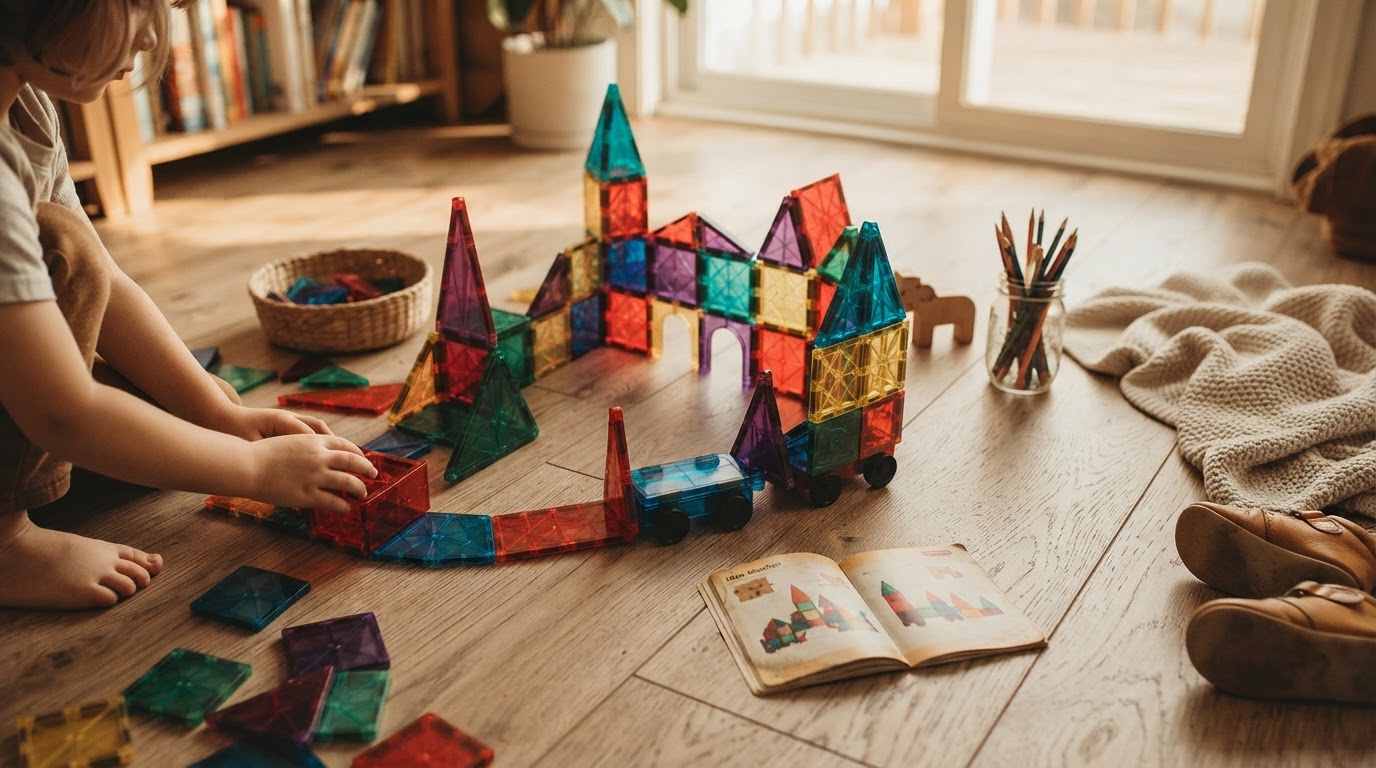
Supporting Open Ended Play with STEM Magnetic Tiles
 Daniel OkaforField Tester
August 13, 2026. This evaluation explores the role of versatile building materials in fostering creative autonomy. It is written for parents and educators seeking toys that grow with a child’s skill level.
The Challenge of Single-Purpose Toys
I have spent years watching how children interact with different categories of playthings, and the most common frustration I encounter is the "finished" toy. A toy with a specific script—press this button to hear this sound—often loses its appeal within forty-eight hours. According to Maison Rue, open-ended toys are distinct because they do not have a single purpose, script, or outcome; instead, they invite children to explore and create freely. When a toy dictates the play, the child is a passive participant. When the toy is a tool, like plain wood blocks or tiles, the child becomes the architect. I tested this for several weeks in a household with three children, and the difference in engagement was stark. While the electronic gadgets were discarded by noon, the building sets remained in the center of the living room floor.
What surprised me was how much mental effort goes into play when there are no instructions. In my observations, children often struggle initially when faced with a blank slate. However, this friction is where the real learning happens. Oh Happy Play Day identifies magnetic tiles as a top choice for sparking meaningful play precisely because they bridge the gap between simple stacking and complex structural engineering. This type of engagement is particularly vital when considering [open ended play toys for autism](/blog/open-ended-play-toys-for-autism), where the sensory feedback and predictable magnetic connection provide a grounding experience that still allows for infinite creative expression. Without a predefined "correct" way to play, the pressure to perform vanishes, leaving room for pure experimentation.
Testing STEM Magnetic Tiles in the Field
I brought a set of STEM Magnetic Tiles into a classroom setting to see how they handled the rigors of daily use by multiple age groups. Day three is where I noticed the shift: the children stopped building simple towers and started integrating the tiles into other play scenarios. They became garages for toy cars, stables for plastic animals, and even "spaceships" for action figures. These tiles serve as a foundational element for [stem toys for 3 year olds](/blog/stem-toys-for-3-year-olds), providing the tactile satisfaction of magnets that click together without the fine motor frustration of smaller interlocking bricks. The magnets are strong enough to hold a vertical wall, which is essential for building confidence in younger creators who are still developing their steady hands.
During my testing, I focused on the durability of the sonic-welded edges and the clarity of the plastic. I have seen cheaper alternatives crack after a single drop on a hardwood floor, but these tiles held up through repeated tumbles. For families on the move, these sets function well as [travel friendly toddler activities](/blog/travel-friendly-toddler-activities) because they pack flat and offer high play-value per square inch of luggage space. What I’d do differently next time is introduce the expansion packs earlier. While a basic set is great for a start, the moment I added the car bases and larger geometric shapes, the complexity of the builds tripled. The tiles don't just sit there; they become whatever the child needs them to be at that specific developmental stage, from a color-sorting activity to a lesson in structural load-bearing.
A Framework for Selecting Open-Ended Materials
Choosing the right tools for a playroom requires looking past the bright packaging and focusing on the long-term utility of the object. Based on my field tests, here is the moment it earned its place: when I realized I hadn't been asked to "fix" a broken toy or find a lost specialized part in over a week. A good open-ended toy should be durable enough to be stepped on and versatile enough to be a castle one day and a grocery store the next. When evaluating new additions to a STEM-focused environment, I use a specific set of criteria to ensure the investment provides years of value rather than days of distraction.
- Multi-Age Utility: Does the toy remain relevant as the child moves from basic stacking to complex storytelling?
- Structural Integrity: Are the magnets or connectors strong enough to support builds taller than twelve inches?
- Cross-Compatibility: Can the tiles be used alongside existing toys like wooden blocks, silks, or figurines?
- Safety and Finish: Are the edges smooth and the internal magnets securely encased to prevent breakage?
- Ease of Cleanup: Does the toy set facilitate quick organization, such as stacking or nesting, to encourage independent cleanup?
Sources

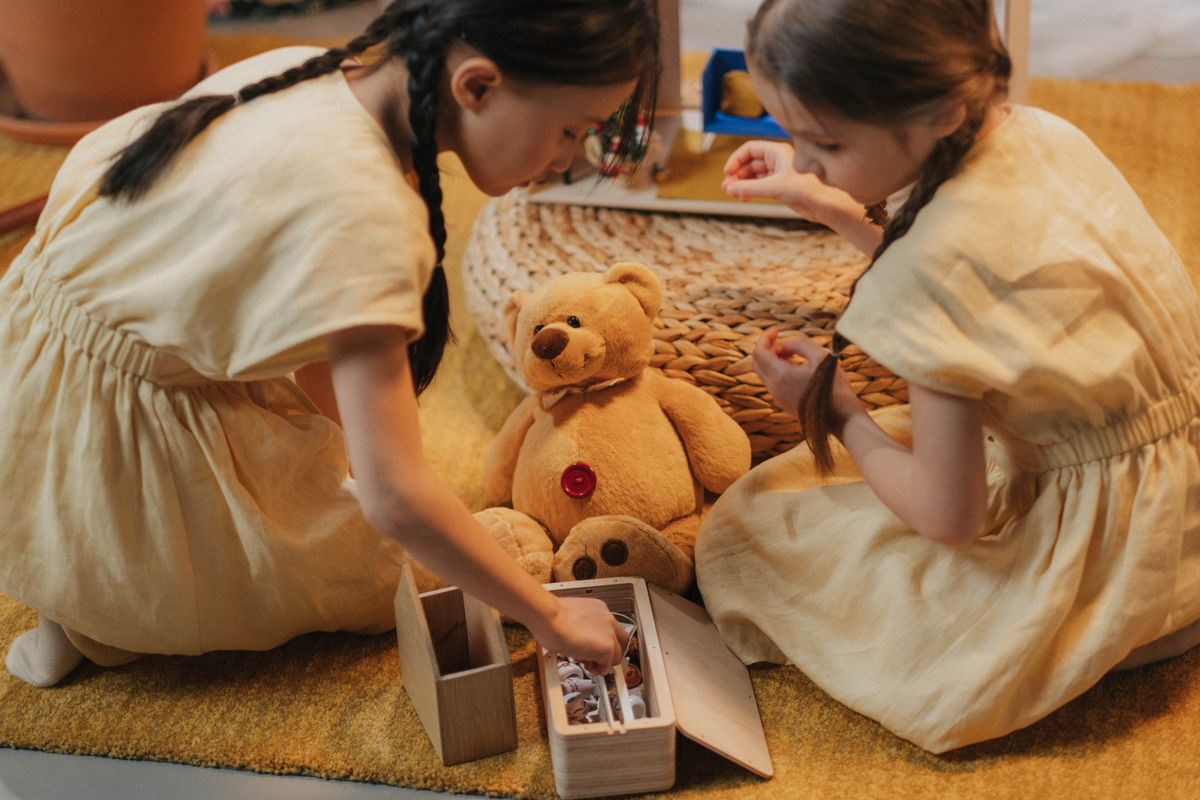
Photo by Polesie Toys on Pexels
- Open-Ended Toys by Age: A Guide From Babyhood to ...
- Best Open-Ended Toys According to a Pediatrician Mom
- Our Top 10 Open-Ended Toys to Spark Meaningful Play