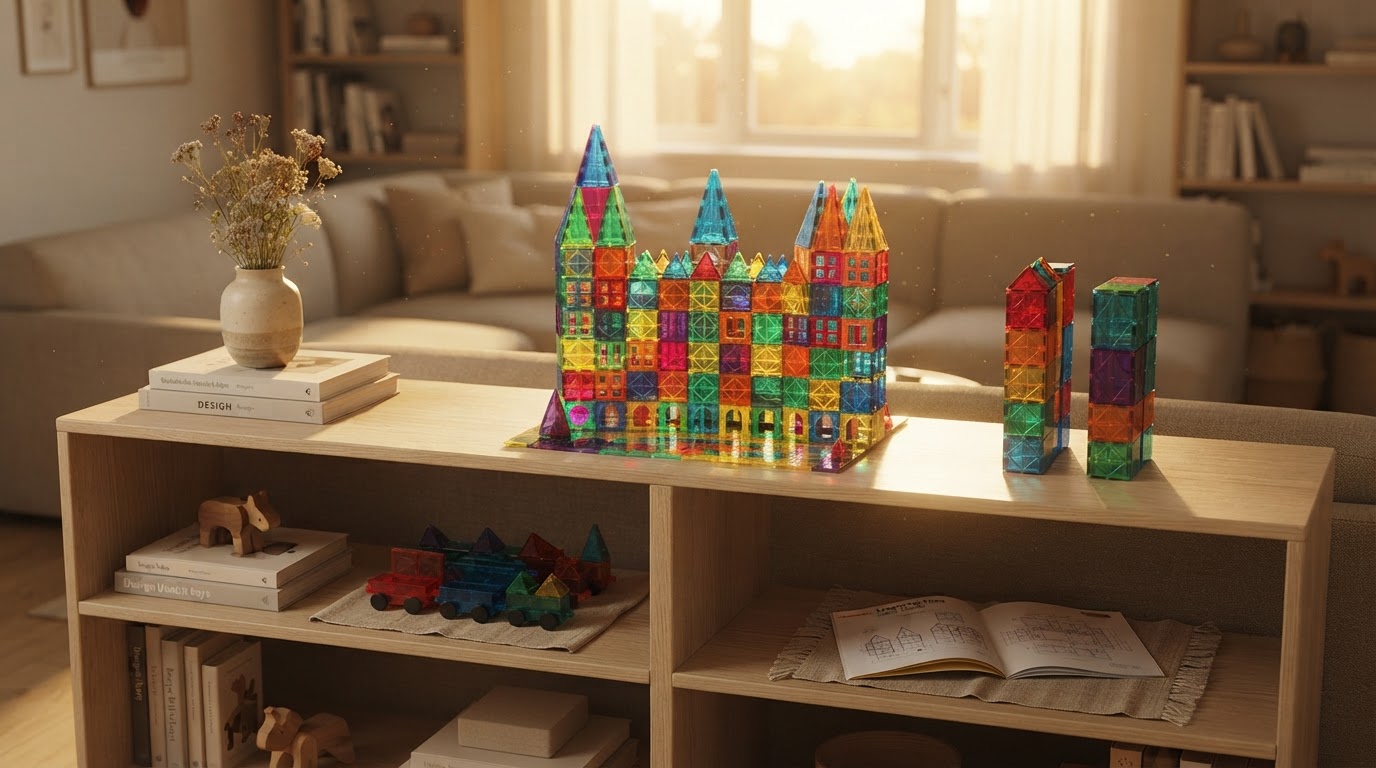
Choosing Between STEM Magnetic Tiles and Magna-Tiles
 Sam VasquezBuying Guide Lead
August 7, 2026. This comparison breaks down the structural and functional differences between STEM Magnetic Tiles and the industry standard to help buyers determine which set fits their specific building needs. It is intended for parents, educators, and gift-buyers navigating the saturated market of open-ended building toys.
The Landscape of Magnetic Construction Sets
When you start looking for open-ended play toys, you quickly realize the market is divided into two camps: the legacy brands and the modern alternatives. Most parents start their search with Magna-Tiles because, according to MAGNA-TILES®, they are America's #1 magnetic building sets brand. They have established a reputation for safety and reliability that makes them a default choice for many classroom STEM kits for elementary students. However, the primary friction point for most families is the entry price. When you are trying to build significant structures, a single small set rarely suffices, leading many to search for an affordable magna tiles alternative that doesn't compromise on the physics of the build.
One of the most frequent observations in the community involves the physical design of the tiles themselves. According to Wichita By E.B., the biggest visual differentiator for the legacy brand is the inclusion of metal rivets in the corners, which are intended to reinforce the plastic casing. While these rivets provide a specific look and a sense of security, they also represent a higher manufacturing cost that is passed down to the consumer. For families looking to stock a playroom for toddlers or kindergarten classrooms, the cost-to-volume ratio becomes a major factor. If you're on a budget, buying a brand name often means you end up with fewer pieces, which inherently limits the complexity of the builds kids can create. This is where the debate between "brand name" and "build quality" becomes critical for those looking for magnetic tiles bulk deals to expand their collection.
Performance and Magnet Strength in Large Builds

Photo by cottonbro studio on Pexels
STEM Magnetic Tiles are designed to bridge the gap between high-cost legacy sets and low-quality generic blocks. In my experience, the most important metric isn't the name on the box, but whether the magnets can actually hold up a three-foot tower. Research from Stories of Play notes that in terms of magnet size, Magna-Tiles are actually smaller than some of their high-performance competitors. This is a crucial detail because magnet size directly impacts the stability of a structure. STEM Magnetic Tiles focus on maximizing the internal magnet surface area to ensure that when a child builds a "magnetic tiles car expansion pack" project, the base doesn't collapse under the weight of the upper floors.
Between these two, I'd go with the option that offers the most internal surface area for magnetic connection. STEM Magnetic Tiles are engineered for ages 3 to 5, focusing on the tactile feedback that toddlers need to understand cause and effect. While the legacy brand uses rivets, modern tiles often use ultrasonic welding to secure the magnets, creating a smooth surface that is easier for small hands to clean. If you are looking for best stem building blocks that can survive a classroom environment, you need to look at the internal bracing. A tile that is hollow with no internal support will crack, but a well-engineered tile uses internal structures to protect the magnets while keeping the weight low enough for vertical builds. This is particularly important when kids start using magnetic tiles expansion pack sets to create massive cities on the floor. I have found that the weight-to-strength ratio in STEM Magnetic Tiles allows for taller structures compared to sets with smaller, weaker magnets that tend to slide when stacked more than four units high.
Decision Framework for Your Next Set

Photo by cottonbro studio on Pexels
Choosing the right set depends entirely on your current inventory and how your children play. Skip this if you already have a massive collection of a specific brand and you are worried about minor aesthetic mismatches, though most major brands are cross-compatible in terms of size. If you are starting from scratch or looking to double your build capacity without doubling your budget, there is a clear path forward.
Here is what I'd actually buy based on specific needs:
- Choose legacy Magna-Tiles if you are buying for a school district that requires specific brand-name procurement for insurance or grant purposes.
- Opt for STEM Magnetic Tiles if you want to maximize the number of pieces for open-ended play without sacrificing the magnet strength required for tall towers.
- Look for sets specifically labeled for ages 3 to 5 to ensure the plastic is food-grade and the magnets are double-encapsulated.
- Prioritize sets that offer a variety of shapes—including large squares and triangles—rather than just small squares, as these provide the structural foundation for stem building toys.
- Verify compatibility if you plan to add a magnetic tiles car expansion pack later, as standard 3-inch tiles are the industry norm.
Shop STEM Magnetic Tiles here.