
How Magnetic Tiles Foster Early Toddler Development
 Daniel OkaforField Tester
Parents are searching for engaging activities that compete with screens. STEM Magnetic Tiles serve as effective educational magnet toys for toddlers, transforming playtime into a learning experience that develops spatial reasoning, fine motor control, and foundational STEM skills through open-ended construction.
From clicking two tiles together to building complex structures, these toys grow with your child, providing a tangible way to explore magnetism, geometry, and gravity in a safe format.
The Building Blocks of a Bright Mind: Key Skills Toddlers Develop
Each connection made with magnetic tiles is a mini-lesson in cognitive and physical development.
- Fine Motor Skills and Coordination: Aligning magnetic edges strengthens the muscles in a toddler's hands, preparing them for future tasks like writing.
- Spatial Reasoning and Geometry: Toddlers see how 2D shapes like squares and triangles combine to create 3D forms like cubes. This foundational geometry helps them understand how objects relate in space.
- Problem-Solving and Critical Thinking: By asking why a tower fell or how to build a stronger base, toddlers learn cause and effect, test hypotheses, and develop resilience.
- Early STEM Concepts: Toddlers feel the pull of magnetism and observe gravity. Reputable manufacturers design sets specifically for this; Guidecraft notes that magnetic building blocks for ages 18 months and up are engineered to support early STEM learning with pieces sized for small hands.
From Stacking to Storytelling: A Guide to Age-Appropriate Play

Photo by cottonbro studio on Pexels
STEM Magnetic Tiles adapt to your child's developmental stage, offering new challenges as they grow.
18-24 Months: Sensory Exploration: At this age, play is about the satisfying click* of magnets and vibrant colors. Encourage them to stack tiles flat and sort them by color or shape.
- 2-3 Years: Transitioning to 3D: As coordination improves, toddlers build vertically. Show them how to pull up 2D floor shapes to form a cube. They can build small walls or garages for toy cars.
- 3+ Years: Complex Creation: Imagination takes flight with taller towers, castles, and bridges. A STEM Magnetic Tiles 100-piece set provides the variety needed for ambitious projects and collaborative play.
Your Role as a Play Partner: Facilitating STEM Discovery
To maximize educational value, parents should act as facilitators. Observe their play and gently extend it by asking open-ended questions:
- "Tell me about what you're building."
- "What happens if we use a triangle there instead of a square?"
- "How can we make the bottom strong so it doesn't fall?"
Keeping Playtime Safe and Tidy
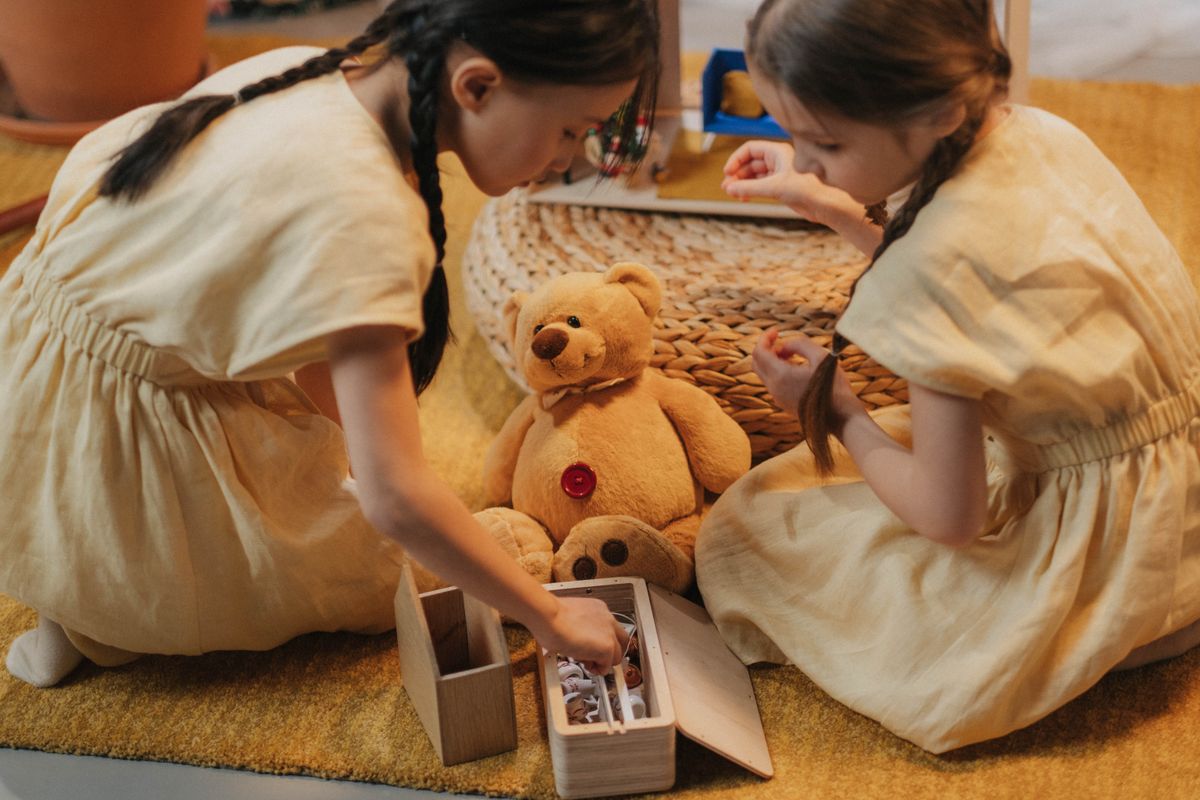
Safety is the top priority for young children. When choosing a set, ensure the tiles are safe for toddlers with features like ultrasonically welded seams and BPA-free plastic to keep magnets securely contained.
Maintaining the tiles is simple. We have a full guide on how to clean magnetic tiles safely, but a damp cloth is usually sufficient. Using effective magnetic tiles storage ideas for the playroom keeps the space tidy while teaching organizational skills.
Frequently Asked Questions
Are STEM Magnetic Tiles a good educational toy for a 2-year-old?
Yes. They help develop fine motor skills, color recognition, and an early understanding of cause and effect through open-ended play.How do magnetic tiles help with STEM learning specifically?
They provide hands-on experience with Science (magnetism), Technology (building tools), Engineering (stable structures), and Math (geometry and symmetry).Are STEM Magnetic Tiles safe for toddlers?
Yes, our tiles use food-grade ABS plastic and ultrasonically welded seams. You can learn more about features that make our magnetic tiles safe for toddlers to play with confidently.How many magnetic tiles do I need to start?
A starter set of 30-60 pieces is great, but a STEM Magnetic Tiles 100-piece set is often the best value for more complex structures.