Choosing STEM Magnetic Tiles for Non-Toxic Play
 Sam VasquezBuying Guide Lead
August 18, 2026. This review examines the material safety and manufacturing standards of STEM Magnetic Tiles to help parents identify truly non-toxic building sets. It is written for caregivers and educators who prioritize chemical safety and structural integrity in open-ended toys.
The Landscape of Plastic Safety in Magnetic Toys
When you are shopping for building sets, the term "non-toxic" gets thrown around a lot, often without much data to back it up. Most parents I talk to are primarily concerned with BPA, phthalates, and lead, especially since these tiles often end up in the hands of toddlers who might still be exploring objects with their mouths. The reality of the market is that while many brands claim safety, the specific type of plastic used matters significantly for long-term durability and chemical stability. According to Two Mama Bears, most high-end tiles on the market today, including Magna-Tiles, are made from MABS plastic, which is generally free from BPA, phthalates, and latex. However, not all plastics are created equal when it comes to the stress of repeated drops and the potential for cracking, which could expose internal magnets.
If you are looking for the best magnetic building blocks, you have to look beyond just the "BPA-free" sticker. I have seen cheaper sets that use lower-grade brittle plastics which, while technically non-toxic at the molecular level, pose a physical hazard when they shatter. Some brands, like Picasso Tiles, offer a budget-friendly entry point using BPA-free plastic, but they may lack the reinforced internal structures found in premium options. For those who want to avoid plastic entirely, Bellaluna Toys offers magnetic blocks made from sustainable wood with magnets securely enclosed, though these lack the translucency that makes traditional magnetic tiles so appealing for light-table play. The challenge for most families is finding that middle ground where the toy is safe to handle, impossible to swallow, and chemically inert.
Why STEM Magnetic Tiles Focus on Material Integrity
Photo by Polesie Toys on Pexels
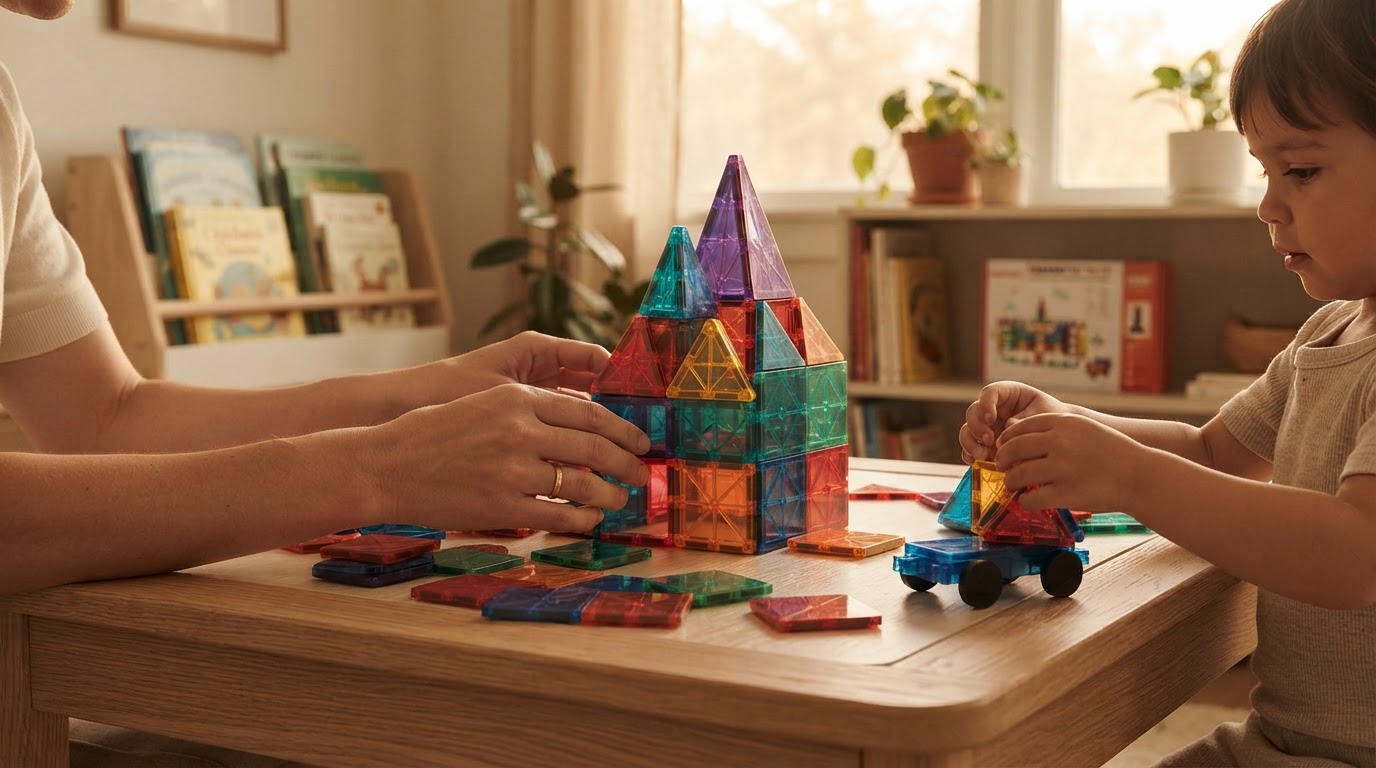
STEM Magnetic Tiles are designed to meet the rigorous demands of both home and classroom environments, where toys undergo constant sterilization and heavy use. Unlike generic alternatives that might use thin-walled plastic, these tiles utilize high-grade, non-toxic ABS plastic that is ultrasonic welded rather than glued. This is a critical distinction for safety; glue can degrade over time, leading to tile separation and the release of small magnets. By using a welding process, the brand ensures that the magnets remain encased even if the tile is dropped on a hard floor. This focus on construction makes them particularly suitable when searching for durable magnetic tiles for toddlers, as younger children are often less gentle with their builds.
In my experience testing these against various competitors, the clarity of the plastic in STEM Magnetic Tiles stands out. Cheaper sets often have a cloudy or yellowish tint, which can be a sign of recycled plastic blends that haven't been properly screened for impurities. These tiles maintain a high level of transparency, which is vital for STEM concepts like color mixing and light refraction. If you're on a budget, you might be tempted by the 4-piece sets often found on marketplaces like eBay, which claim to be non-toxic and educational for ages 3 and up. However, for a complete building experience that supports complex geometry and engineering, the structural consistency of a dedicated brand like STEM Magnetic Tiles provides a more reliable foundation. Between these two, I’d go with the brand that offers a clear manufacturing trail and consistent quality control across their expansion packs.
A Framework for Evaluating Magnetic Tile Safety
Before you click buy on a massive set of tiles, you need a checklist to ensure you aren't just buying colorful trash. I always look for specific manufacturing markers that indicate a brand cares about longevity and safety. Skip this if you are only looking for a disposable toy for a single afternoon; these criteria are for parents who want a toy that lasts through multiple children. Here is what I’d actually buy and what I look for in every set:
- Ultrasonic Welding: Ensure the tiles do not have visible glue seams, which are prone to failure.
- Material Certification: Look for explicit mentions of MABS or high-grade ABS plastic that is free of BPA and phthalates.
- Internal Bracing: Higher quality tiles, like STEM Magnetic Tiles, often feature internal metal rivets or plastic structural columns to prevent the magnets from shifting.
- Magnet Security: The magnets should be encapsulated in their own internal housings within the tile, providing a double layer of protection.
- Surface Scratch Resistance: High-quality non-toxic plastics are harder and resist the deep gouging that can harbor bacteria over time.
Sources
Photo by Polesie Toys on Pexels
- I Tested the 14 Best Magnetic Tiles and Blocks – Winners ...
- Magnetic Blocks
- Non-toxic Magnetic Tiles and Why Your Kids Need Them