Are Magnetic Tiles Safe? A Parent's Guide for Toddlers
 Daniel OkaforField Tester
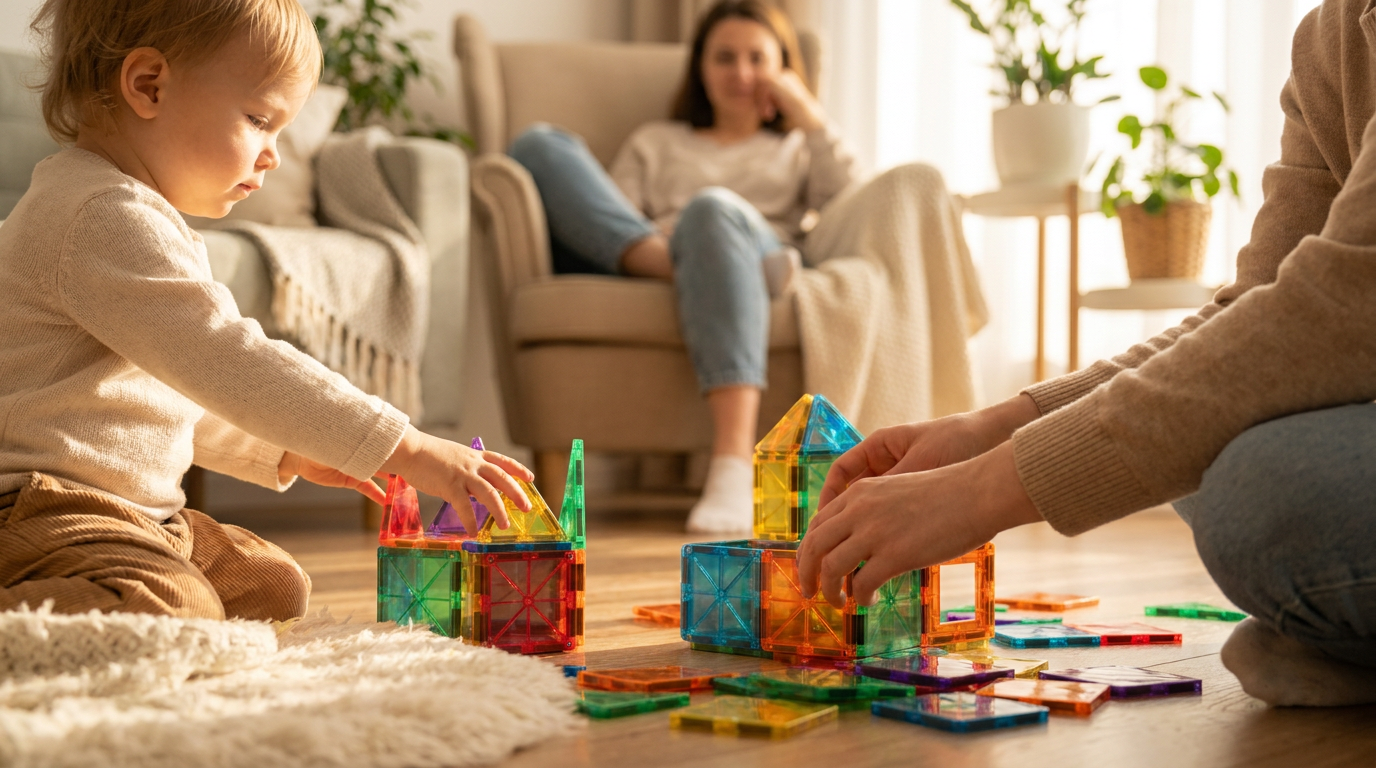
As a parent, your child’s safety is the top priority. High-quality magnetic tiles are safe for toddlers ages three and up and can be used by younger children with diligent adult supervision. The key lies in understanding potential risks and how premium tiles, like our STEM Magnetic Tiles, are engineered to prevent them.
Parents praise magnetic tiles for open-ended play, but the primary concern revolves around the small magnets sealed inside. This guide covers the built-in safety features of our tiles and how to create a secure environment for your toddler’s imaginative building.
The Real Risk: Why Magnet Safety Is Crucial
The main danger isn't choking—most tiles are too large—but the potential for a tile to break, releasing high-powered magnets. If a child swallows two or more magnets, they can attract each other across intestinal walls, leading to severe internal injuries. Medical experts, such as those at Blue Cross Blue Shield of Michigan's MIBlueDaily, warn about this specific risk. Structural integrity is the most critical safety component. Because the danger lives in broken tiles rather than intact ones, the moment a tile breaks deserves its own protocol — decided now, not improvised mid-playtime. Stop the play calmly, gather every fragment before anything else happens in the room, and compare the pieces against a whole tile so you can account for the full casing; a corner chip is a different event from a split seam over a magnet channel. Broken pieces go into a taped bag and then into an outdoor bin, out of reach of the household's youngest members and the dog alike. If there is any real possibility a child swallowed a magnet — you saw mouthing near a broken tile, or pieces cannot be accounted for — treat it as an emergency-room visit, not a wait-and-see: swallowed magnets can cause serious injury while early symptoms mimic an ordinary stomach bug (vomiting, abdominal pain, fussiness), which is exactly why doctors urge parents not to watch and wait at home.
Engineered for Safety: How STEM Magnetic Tiles Protect Your Child
Photo by cottonbro studio on Pexels
At STEM Magnetic Tiles, our tiles are built to withstand the rigors of toddler play, ensuring magnets stay secure.
- Durable, Food-Grade MABS Plastic: We use high-impact, BPA-free, and phthalate-free MABS plastic. It is resistant to cracking and won't shatter or develop sharp edges.
- Ultrasonic Welding: Tile halves are fused using ultrasonic welding, creating a permanent bond superior to glue.
- Reinforced Rivets: Metal rivets at the corners lock the casing together, preventing it from splitting if dropped.
A Parent's Safety Checklist for Magnetic Tile Play
Supervised play helps toddlers explore how toddlers learn with STEM Magnetic Tiles while building fine motor skills. The checklist works best when the child is gradually enrolled in it rather than merely subjected to it. Even a three-year-old can hold two rules stated simply and repeated consistently: tiles stay out of mouths, and a broken tile goes straight to a grown-up. The second rule lands better with praise than alarm — a child who hands over a cracked tile and gets a genuine "thank you for showing me" will do it every time, while one who senses the toys might be taken away learns to hide the evidence. Slightly older children can join the inspection itself: making the monthly crack-check a two-minute sorting game ("find any tile with an owie") teaches the habit that will eventually run without you, and turns a chore into the kind of job young kids actively request. None of this replaces adult eyes — the final judgment on any suspect tile stays with the parent — but a household where the rules are shared knowledge is measurably safer than one where safety is a silent adult activity.
Frequently Asked Questions
Photo by Artem Podrez on Pexels
What makes STEM Magnetic Tiles safe for toddlers?
They use food-grade MABS plastic, ultrasonic welding, and reinforced rivets to prevent tiles from breaking and releasing magnets.What is the recommended age for playing with magnetic tiles?
The standard recommendation is ages 3 and older, though many families introduce them to younger toddlers under direct supervision.How can I tell if a magnetic tile is broken or unsafe?
Check for visible cracks, separating edges, or a rattling sound. Remove damaged tiles from play immediately.