
Rethinking Magnetic Tiles and Fine Motor Skills
 Maya ChenContributing Editor
The fine motor magic of magnetic tiles isn't in building the tower, but in the precise, deliberate act of taking it apart piece by piece. The conventional wisdom says that constructing elaborate castles with STEM Magnetic Tiles is a goldmine for dexterity. This view overlooks a critical detail: rapid building often relies on a clumsy, whole-hand palmar grasp—slapping tiles together—which does little to refine the finger control necessary for later academic skills.
Construction vs. Dexterity: A Mismatch
When a child builds quickly, the goal is height and stability, not precision. This encourages the use of a palmar grasp, where the entire hand and palm are used to press tiles into place. While this action is appropriate for early development, it does not sufficiently challenge the small, intrinsic muscles of the hand required for a mature pincer grip. A child can create impressive 2D and 3D patterns with magnetic tiles using this whole-hand method, giving the appearance of advanced skill. However, the underlying motor action is far less nuanced than what is required for tasks like buttoning a shirt or holding a pencil correctly. The satisfying 'click' of the magnets masks the lack of fine motor engagement.
The Precision of Deconstruction
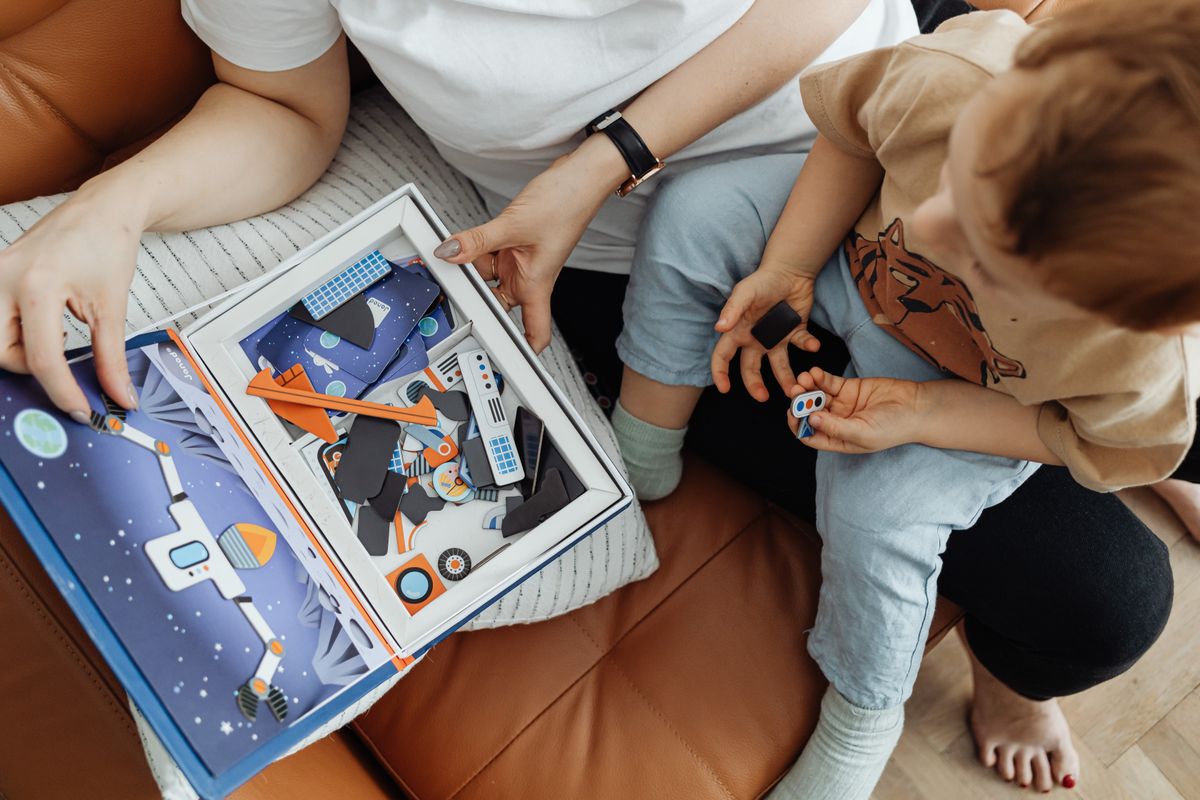
Photo by https://kaboompics.com/ on Pexels
Here's the part nobody talks about: disassembling a magnetic tile structure is where the real work happens. To separate a single tile from a larger build, a child cannot use a clumsy palmar grasp. Instead, they must isolate their thumb and forefinger to apply controlled force. This action, known as the pincer grasp, is a critical developmental milestone. According to child development authority Pathways.org, a strong pincer grasp is foundational for writing, drawing, and using tools.
Pulling two tiles apart requires the child to modulate their force to overcome the magnetic pull without sending the pieces flying. This resistance training strengthens the exact muscles needed for holding a pencil with endurance and control. The thin profile of STEM Magnetic Tiles further encourages this grip, as they are difficult to pick up from a flat surface without using the fingertips. As long as you've confirmed magnetic tiles are safe for your toddlers, this deconstruction phase is a powerful, built-in therapeutic exercise.
Turn Cleanup into a Targeted Exercise
This reframes the dreaded cleanup time from a chore into a focused training session. Instead of rushing to throw all the tiles into a bin, the task can be to take the structure apart piece by piece. This deliberate, slow-paced activity prioritizes control and precision over speed. Storing the tiles by stacking them neatly requires the same pincer grip and careful alignment needed during deconstruction. This approach transforms simple playroom storage ideas for your magnetic tiles into an extension of the fine motor lesson, reinforcing the day's most valuable motor skill practice.
I'll change my mind when I see a longitudinal analysis showing that speed of construction with magnetic tiles correlates more strongly with handwriting legibility than the controlled deconstruction of those same structures. Until then, the focus should be on the teardown.
Why is deconstructing tiles a better fine motor exercise?

Photo by Polesie Toys on Pexels
Deconstructing, or taking tiles apart, forces a child to use a pincer grasp (thumb and forefinger) to isolate and pull a single piece against magnetic resistance. This specific action directly strengthens the small hand muscles required for holding a pencil and other precise tasks. Building, in contrast, often relies on a less-developed palmar grasp to slap tiles together.
So, is building with magnetic tiles useless for motor skills?
Not entirely, but its primary benefits lie elsewhere. Building supports the development of hand-eye coordination, spatial reasoning, and balance. However, for the targeted development of finger dexterity and hand strength—the core components of fine motor skills—the act of careful deconstruction provides a more direct and effective exercise.