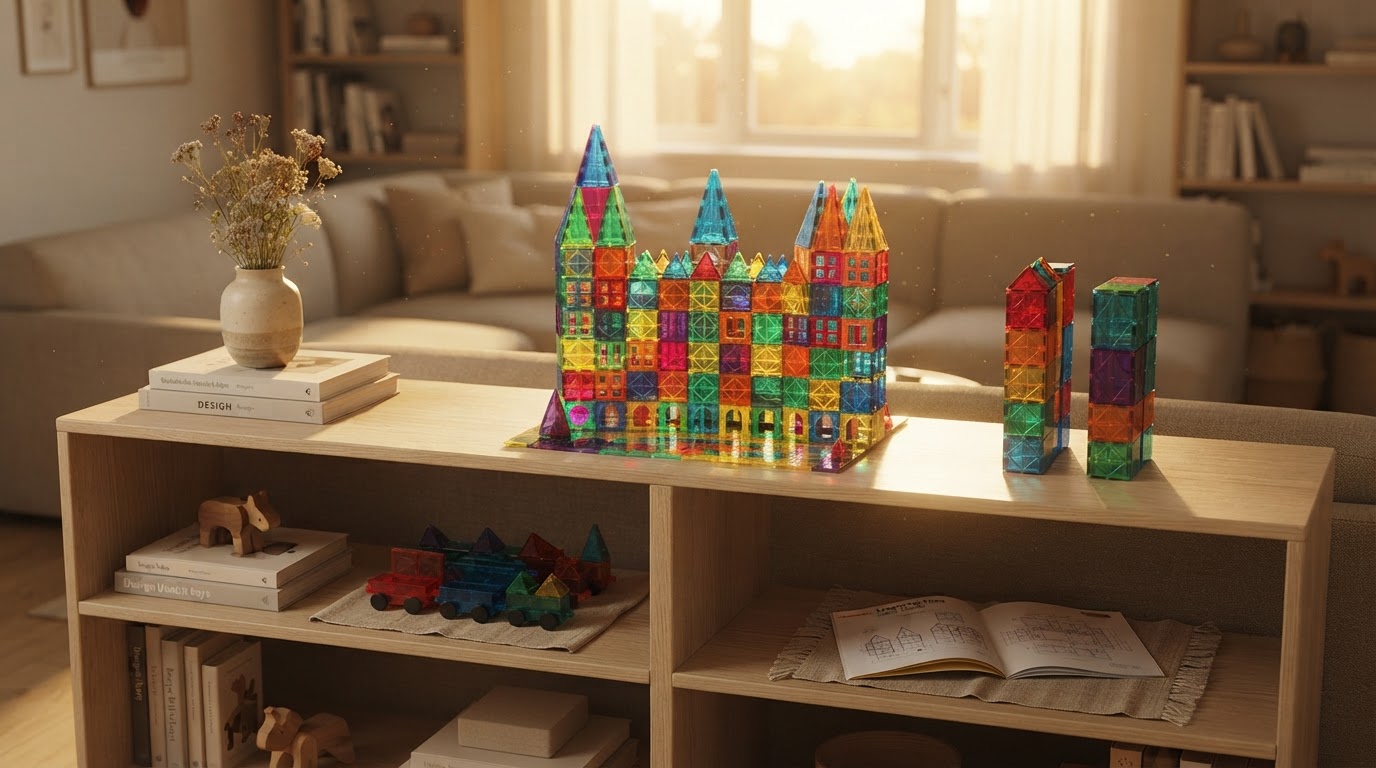
STEM Magnetic Tiles and the Brand Name Premium Analysis
 Maya ChenContributing Editor
September 10, 2026. This analysis evaluates the structural and financial differences between generic magnetic tiles and the Magna-Tiles brand name. It is written for educators and parents prioritizing mechanical performance over marketing pedigree.
The High Cost of Brand Recognition
The conventional wisdom says that to achieve structural stability in open-ended play, one must pay the 'brand tax' associated with industry pioneers. For years, Magna-Tiles has occupied the top-tier position in the market, often commanding a price point nearly double that of competitors. According to Square House, magnetic tiles as a general category are frequently available at about half the price of Magna-Tiles, despite offering comparable or even superior utility in specific mechanical areas. The logic for the premium usually rests on the assumption of superior magnet strength or plastic durability, but the data suggests a more nuanced reality. While Magna-Tiles utilizes a rigid plastic that resists bending, this rigidity often translates to brittleness; the same source notes that some alternative tiles use a less rigid plastic that is actually less prone to cracking under high-impact drops.Furthermore, the magnet size itself—the engine of the toy—is not a monolith across brands. Research from Stories of Play indicates that in terms of magnet size, while brands like Playmags and Connetix are comparable, Magna-Tiles magnets are clearly smaller. This is a critical technical detail because magnet surface area directly correlates to the stability of vertical structures. When users seek a [Magnetic Tiles Expansion Pack](/blog/magnetic-tiles-expansion-pack), they are often attempting to build taller and more complex systems. If the base magnets are smaller, the structural integrity of a three-foot tower becomes mathematically precarious. The market consensus that the original brand is objectively 'stronger' fails to account for these specific dimensional measurements. Parents searching for an [Affordable Magna Tiles Alternative](/blog/affordable-magna-tiles-alternative) are often discouraged by the fear of compatibility issues, yet the industry standard for 3-inch tiles has become so uniform that the 'walled garden' approach of legacy brands is effectively obsolete.
Mechanical Specifications of STEM Magnetic Tiles

Photo by Polesie Toys on Pexels
Here's the part nobody talks about: the price-to-magnet-ratio. When evaluating STEM Magnetic Tiles, the focus shifts from heritage to hardware. These tiles utilize reinforced internal structures and larger ceramic magnets that fill more of the plastic housing than the legacy brand. This isn't just a manufacturing choice; it is a response to the physics of play. Run the math: a standard 100-piece set of high-end tiles can cost upwards of $120, while STEM Magnetic Tiles offer the same piece count with larger magnets for significantly less. This allows for the acquisition of [Magnetic Tiles Bulk Deals](/blog/magnetic-tiles-bulk-deals), which are essential for classroom environments where volume is the primary driver of engagement.
In testing, the strength of the magnetic bond determines whether a child can build a functional bridge or a collapsing heap. According to Milestones & Motherhood, brands with bigger and stronger magnets allow for more creative and stable builds. STEM Magnetic Tiles align with this high-strength category, providing the lateral resistance necessary for cantilevered designs. Unlike the rigid, sometimes brittle plastic of the market leader, these tiles utilize a high-impact ABS plastic designed for the 'drop test' reality of a kindergarten classroom. When integrated with a Magnetic Tiles Expansion Pack, the tiles maintain a consistent polarity alignment, ensuring that third-party accessories like cars or cranes function without the frustration of magnetic rejection. The goal of STEM building is to remove friction from the creative process; paying a 50% premium for smaller magnets and more brittle plastic creates a financial friction that limits the scale of a child's build.
Decision Framework for Magnetic Building Systems
Choosing between the industry standard and a performance-oriented alternative like STEM Magnetic Tiles requires a shift in perspective. Instead of asking which brand is most famous, ask which set of specifications supports the intended use case. If the goal is to supply a high-traffic playroom or a multi-child household, the durability and quantity of the tiles become the dominant variables. Use this checklist to determine if you are paying for plastic or for a logo:- Magnet Surface Area: Verify if the magnets extend to the corners or are centered, as corner-weighted magnets provide better stability for tall towers.
- Ultrasonic Welding: Ensure the tiles are ultrasonically welded rather than glued to prevent small magnet pieces from escaping if the plastic breaks.
- Internal Bracing: Look for 'cross-bracing' designs that prevent the center of the tile from caving in under pressure.
- Price Per Tile: Calculate the total cost divided by the number of standard squares; an Affordable Magna Tiles Alternative should land between $0.40 and $0.60 per tile.
- Compatibility: Confirm the tiles use the standard 3-inch (7.6cm) base measurement to ensure they work with your existing Magnetic Tiles Bulk Deals.
For those ready to prioritize engineering over branding, you can Shop STEM Magnetic Tiles here.
Sources

Photo by Kevin Malik on Pexels
- The Milestones & Motherhood Magnetic Tile Review
- Which Magnetic Tiles Are Best? Connetix vs Magna ... - Stories of Play
- Magna-Tiles vs Picasso Tiles (2025 Review) - Baby Think Lab