Supporting Neurodivergent Play with STEM Magnetic Tiles
 Sam VasquezBuying Guide Lead
July 18, 2026. This guide examines how specific structural toys support the developmental and sensory needs of neurodivergent children. It is written for parents, educators, and therapists seeking durable, open-ended tools for tactile and cognitive engagement.
The Role of Open-Ended Tools in Sensory Support
Finding the right tools for a child on the spectrum often means moving away from toys with fixed outcomes. Traditional toys that perform a single function—like a plastic car that only makes one sound—can lead to frustration or disinterest if the child’s sensory needs aren't met by that specific interaction. According to Chalk Academy, magnetic tiles and blocks are among the best open-ended toys because they allow for varying levels of complexity and tactile feedback. In neurodivergent play, the "process" is frequently more important than the "product." If a child is seeking high-intensity sensory input, they might focus on the clicking sound of magnets joining together. If they are in a state of overstimulation, they might prefer the repetitive, calming motion of sorting tiles by color or shape.
This adaptability is why these tools are a staple in classroom stem kits elementary. Unlike toys with rigid instructions, open-ended materials provide a safe environment for trial and error. For many children with autism, the predictability of magnets—the way they snap together with a consistent force—provides a sense of order and control. This is particularly useful when compared to other sensory options. For example, while Miranda Muirhead notes on Facebook that fidget spinners and play dough are popular for sensory seekers, those items don't offer the same structural building opportunities found in classroom stem kits elementary. I have found that while play dough is great for fine motor skills, it lacks the geometric logic that helps some children visualize spatial relationships. Between these two, I’d go with magnetic tiles for long-term engagement because they grow with the child’s skill level.
Why STEM Magnetic Tiles Fit the Spectrum

Photo by Gustavo Fring on Pexels
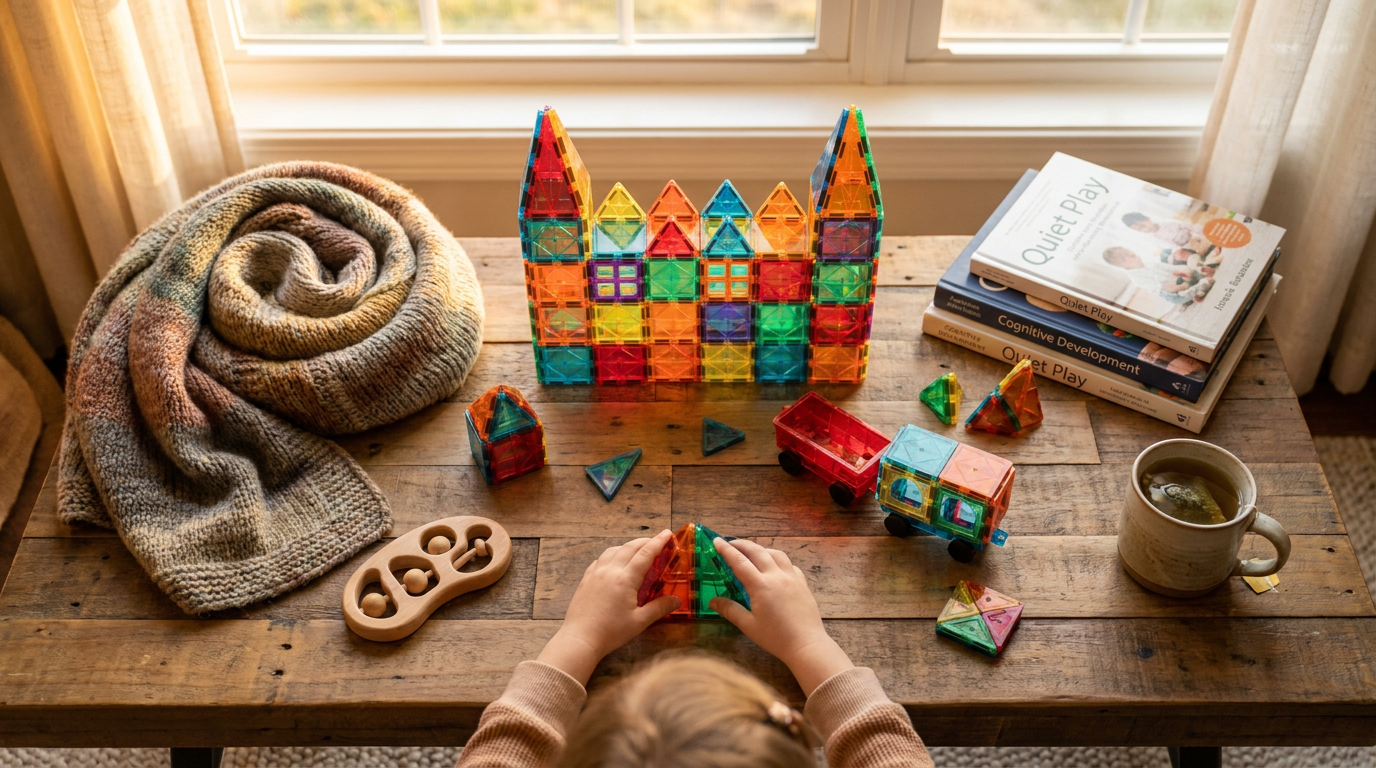
When we look at the specific specs of STEM Magnetic Tiles, the focus is on clarity and structural integrity. These sets are designed as magnetic building blocks for kindergarten and home use, emphasizing strong internal magnets that allow for tall, stable structures. For a child with autism, a flimsy tower that collapses too easily can be a significant trigger for emotional dysregulation. These tiles are built to stay connected, which supports the "bridge building" or "towering" phases often seen in repetitive play patterns. The transparency of the tiles also allows for light play; when used on a light table or near a sunny window, they create colorful shadows that provide visual sensory input without being overwhelming.
If you're on a budget, you might be tempted by generic magnetic building blocks, but there is a noticeable difference in magnet strength. In my experience testing these, the classroom stem kits elementary versions of STEM Magnetic Tiles use sonic welding to keep the magnets securely inside the plastic. This is a critical safety feature for children who may still explore toys with their mouths or who play more vigorously. These tiles also work well as open ended play toys for autism because they don't have a "wrong" way to be used. A child can build a 3D garage for their toy cars or simply lay the tiles flat on the floor to create a colorful mosaic. This flexibility reduces the performance anxiety that can sometimes accompany structured STEM activities. If you are already using classroom stem kits elementary in a school setting, bringing the same tactile experience home can help with the transition between environments, providing a familiar sensory anchor.
Selecting the Right Set for Your Child
Choosing the right configuration depends largely on the child's current motor skills and sensory preferences. If your child is primarily interested in vehicles, look for sets that include a wheeled base. This turns a static building session into a mobile one, which is excellent for "heavy work" sensory needs. However, skip this if your child is easily frustrated by moving parts; sometimes a simple 100-piece starter set of basic squares and triangles is the most effective way to encourage focus. According to Playroom Collective, open-ended toys are those without rules or right answers, and this should guide your purchase. You want enough pieces to create something substantial, but not so many that the sheer volume becomes visually cluttering.
Here’s what I’d actually buy: I recommend starting with a mid-sized set that features a mix of solid and hollow shapes. The hollow shapes are easier for smaller hands to grip, while the solid tiles provide better surface area for light-based play. Before you buy, run through this checklist:
- Magnet Strength: Ensure the tiles can hold a vertical stack of at least 5-6 tiles without buckling.
- Safety Certification: Verify the plastic is BPA-free and the magnets are double-encapsulated.
- Color Palette: For children with visual sensitivities, look for sets with clear, vibrant colors rather than muddy or overly complex patterns.
- Compatibility: Check if the tiles are compatible with other major brands to ensure you can expand the set later.
- Ease of Cleanup: Choose a set that comes with a storage bag, as the organization process can be turned into a calming, repetitive end-of-play ritual.
Shop STEM Magnetic Tiles here.
Sources

Photo by Gustavo Fring on Pexels
- Open-Ended Play Toys - Creative Learning & Montessori
- Our Top 10 Open-Ended Toys to Spark Meaningful Play
- Best Open-Ended Toys According to a Pediatrician Mom