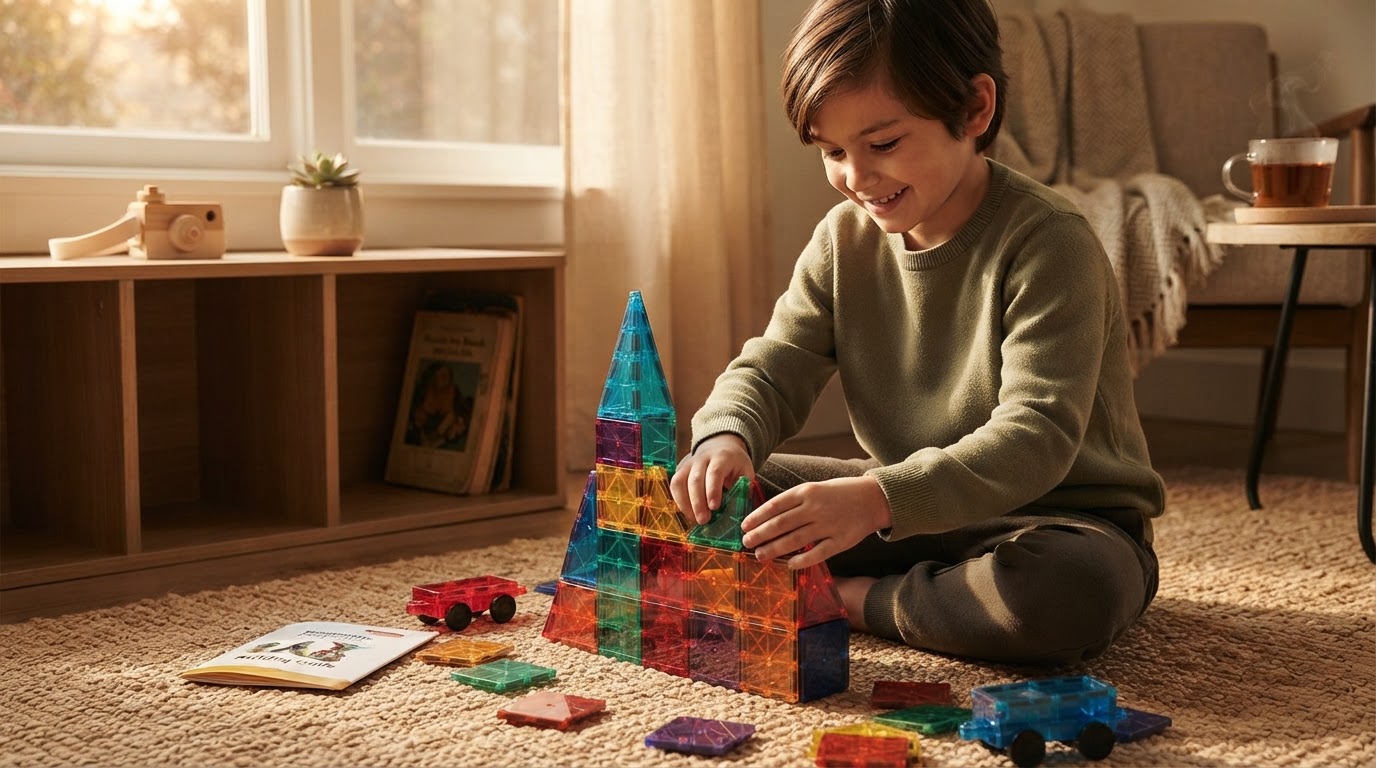
STEM Magnetic Tiles and Sensory-Driven Play for Autism
 Priya RamanSenior Analyst
September 17, 2026 — Recent shifts in developmental therapy emphasize the role of tactile, predictable materials like STEM Magnetic Tiles in supporting neurodivergent learners. As caregivers seek tools that bridge the gap between structured activity and creative freedom, these tiles have emerged as a foundational element in home and classroom environments.
Open-ended toys are recognized as the quiet heroes of childhood, offering simple materials that support imagination, focus, and independence without the rigid constraints of traditional puzzles. According to Chalk Academy, these tools facilitate learning by allowing the child to lead the experience rather than following a predetermined set of instructions. For children on the autism spectrum, this lack of "wrong" answers reduces performance anxiety and encourages prolonged engagement with the physical properties of the tiles, such as their weight, transparency, and magnetic pull.
The Sensory-Cognitive Matrix
To understand why these materials are effective, think of it as a matrix of sensory input and cognitive structure. When evaluating toys for autism, two axes matter here: the predictability of the physical connection and the scalability of the resulting structure. STEM Magnetic Tiles provide a high level of tactile feedback through the "click" of the magnets, which serves as a self-correcting mechanism for children who may struggle with fine motor precision. The research context indicates that magnetic tiles are frequently sought for ages 3 to 5, a critical window for developing spatial awareness. The decision rule for selecting these sets often hinges on the balance between basic geometric shapes and expansion possibilities. For instance, a standard set provides the necessary squares and triangles for 2D patterning, while a [magnetic tiles car expansion pack](/blog/stem-magnetic-tiles-open-ended-play) introduces motion, allowing the play to evolve as the child’s interests shift. This adaptability ensures the toy remains relevant as a child transitions from simple stacking to complex architectural builds. By defining open ended play through the lens of sensory seeking, we see that the vibrant colors and light-refracting properties of the tiles satisfy visual needs while the magnetic resistance provides the proprioceptive input many neurodivergent children crave.
Expert tip: Use a light table or a sunny window to enhance the visual feedback of the tiles; the colorful shadows created by the translucent plastic can help ground sensory-seeking children during periods of overstimulation.
Integrating these tools into a daily routine allows for a natural progression from solitary play to collaborative building. While some may start with the [best magnetic tiles for toddlers](/blog/best-magnetic-tiles-for-toddlers) to establish basic motor skills, the long-term value lies in how STEM Magnetic Tiles redefine open ended play by growing with the user. This scalability makes them a sustainable choice for families looking for versatile, durable educational aids.