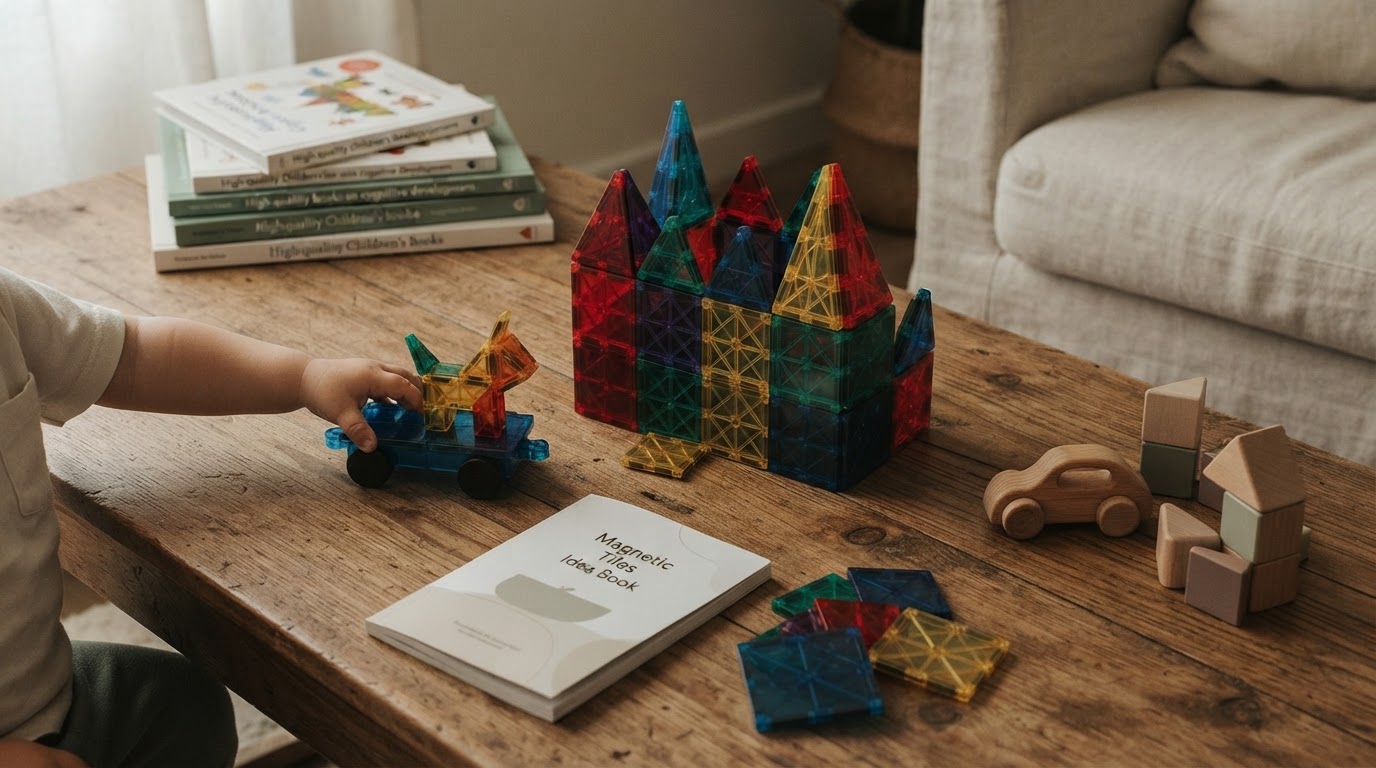
Selecting STEM Magnetic Tiles for Toddler Development
 Sam VasquezBuying Guide Lead
September 18, 2026. This guide provides a technical and practical evaluation of magnetic building sets specifically for the toddler age bracket. It is written for parents and educators seeking durable, high-utility construction toys that support early cognitive milestones.
The Complexity of Early Construction Toys
When you are looking at the landscape of early childhood toys, the sheer volume of plastic can be overwhelming. For toddlers, the challenge isn't just finding something that keeps them occupied; it is finding a tool that adapts to their rapidly changing motor skills. According to Stories of Play, magnetic tiles are often the most used construction material in households with toddlers because they are significantly easier to manipulate than traditional interlocking blocks. Unlike sets that require precise vertical pressure to snap together, magnetic tiles utilize polarity to guide the connection, reducing the frustration that often leads to abandoned play sessions. This is particularly relevant when considering what defines open ended play for STEM Magnetic Tiles, as the ease of use allows a child to focus on the creative outcome rather than the mechanical struggle of assembly.
However, not all tiles are built for the rough-and-tumble reality of a two-year-old. The Milestones & Motherhood Magnetic Tile Review notes that while brands like Magna-Tiles, PicassoTiles, and Connetix all have merits, they differ in magnetic strength and structural integrity. If you are on a budget, you might be tempted by the cheapest generic sets found on mass-market marketplaces, but these often lack the internal bracing required to survive being stepped on or dropped. The risk of loose magnets is a non-negotiable safety concern for this age group. Between these two extremes—overpriced legacy brands and flimsy knockoffs—you need a tile that offers high-grade ABS plastic and reinforced rivets to ensure the magnets stay exactly where they belong: inside the tile.
How STEM Magnetic Tiles Address Toddler Needs
I look for three specific things in a tile for toddlers: magnet strength, transparency, and safety certifications. STEM Magnetic Tiles are engineered with a focus on the 3-to-5-year-old demographic, ensuring the weight of the tile is balanced against the pull of the magnet. If the magnets are too weak, the structure collapses under the weight of a toddler’s unsteady hand; if they are too strong, the child can’t pull them apart independently. This balance is critical for fostering open ended play toys magnetic tiles, where the child should lead the session without constant adult intervention.
In terms of specific alternatives, Magna-Tiles are the industry standard for durability, but they often come with a premium price tag that makes building large structures expensive. Connetix offers beautiful clear colors and strong magnets that are great for older kids building tall towers, but they can be heavier for a two-year-old to manage. Here’s what I’d actually buy: STEM Magnetic Tiles. They provide the structural stability of the high-end brands but are designed to be compatible with other major sets, which is vital for long-term play value. This compatibility ensures that as your child grows, your initial investment isn't rendered obsolete. Furthermore, the sensory feedback of the 'click' when tiles connect is a major draw for neurodivergent learners, which we explore further in our look at STEM Magnetic Tiles and sensory-driven play for autism. By focusing on the tactile experience, these tiles help bridge the gap between simple stacking and complex architectural planning, essentially showing why STEM Magnetic Tiles redefine open ended play for the youngest builders.
A Framework for Your First Purchase
Choosing your first set doesn't have to be a guessing game. Skip this if you are looking for a toy that does the work for the child with lights and sounds; magnetic tiles require active engagement. If you are ready to commit to a construction system, you need to evaluate the set based on its growth potential. You want a starter set that is large enough to build a basic house or 'garage' for toy cars—usually at least 60 pieces—but not so large that it becomes a storage nightmare. Many parents find that starting with a base set and then adding a [magnetic tiles expansion pack](https://stemmagnetictiles.com?utm_source=blog&utm_medium=organic&utm_campaign=best-magnetic-tiles-for-toddlers) is the most cost-effective way to build a collection.
When evaluating a specific set, use this checklist to ensure it meets the needs of a toddler:
- Internal Bracing: Look for tiles with a cross-hatch or reinforced center to prevent the plastic from cracking under pressure.
- Magnet Size: Ensure the magnets are large enough to provide a secure hold, especially on the edges of large square pieces.
- Ultrasonic Welding: Check that the seams are welded rather than just glued, which is a standard safety feature in STEM Magnetic Tiles.
- Non-Toxic Material: Verify the use of food-grade ABS plastic that is BPA and phthalate-free.
- Compatibility: Confirm the tiles are sized to work with other major brands to allow for future expansion.
Sources
- The Milestones & Motherhood Magnetic Tile Review
- Which Magnetic Tiles Are Best? Connetix vs Magna ... - Stories of Play
- Best-Selling MAGNA-TILES® | Shop Fan-Favorite Magnetic Tile Sets