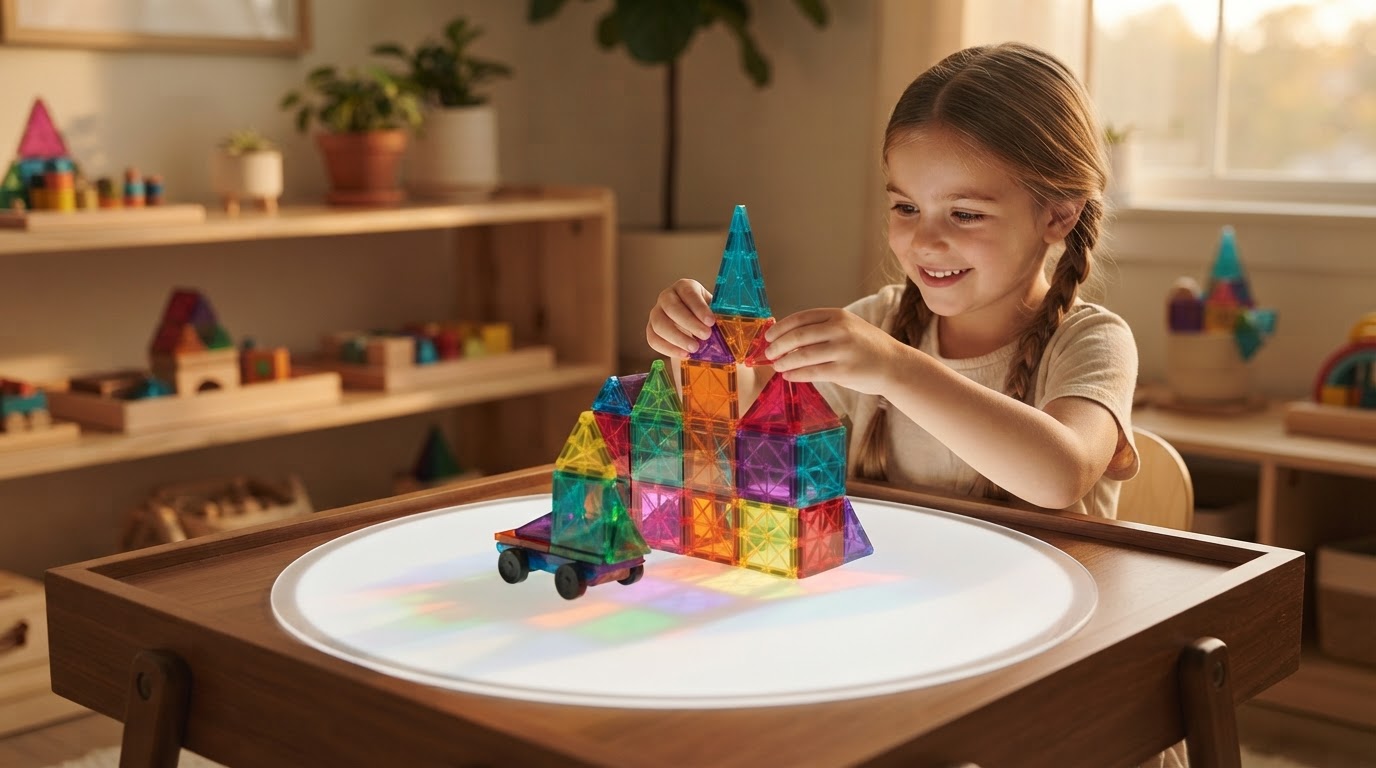
How do STEM Magnetic Tiles enhance light table activities?
 Priya RamanSenior Analyst
October 6, 2026 — When integrated with a light table, STEM Magnetic Tiles serve as translucent prisms that transform white light into a spectrum of color, facilitating hands-on lessons in optics and spatial geometry.
Educators and parents use light tables to provide a high-contrast environment that isolates visual information, making it easier for children to focus on specific attributes of their toys. Think of it as a matrix of luminosity and transparency; the light source acts as the catalyst that turns a standard building session into a laboratory for color theory. By placing these tiles on an illuminated surface, children move beyond simple construction to explore the physical properties of light.
How does backlighting improve geometric recognition?
Backlighting enhances geometric recognition by emphasizing the silhouettes and edges of the tiles, allowing children to identify shapes through high-contrast visual cues. Two axes matter here: the clarity of the shape's perimeter and the intensity of the color saturation. When light passes through the translucent plastic of STEM Magnetic Tiles, the internal magnets and structural ribbing create distinct outlines that help children differentiate between isosceles and equilateral triangles. This visual clarity is essential when using geometric shape building toys for kids to master early math concepts.
According to Stories of Play, experimenting with light and color-mixing is one of the primary ways children interact with these sets, as the overlapping of two different colored tiles on a light source produces a third, distinct color. This additive color mixing is more than just a visual trick; it is a practical application of physics. Once you see it this way, the light table becomes a tool for verifying geometric alignment. If tiles are not perfectly flush, the light leaks through the gaps, providing immediate, self-correcting feedback to the builder. This makes it an ideal environment for building complex structures like those found in magnetic tile light table activities village projects.
What sensory benefits do light tables provide for neurodivergent learners?

Photo by Liliana Drew on Pexels
Light tables provide a regulated, high-interest sensory environment that helps neurodivergent learners filter out environmental distractions and focus on tactile engagement. The decision rule: use the light table to reduce visual noise and highlight the specific task at hand. For children with autism or sensory processing sensitivities, the predictable glow of the table provides a calming anchor. This focused illumination is particularly effective when paired with open ended play toys for autism, as it encourages longer periods of concentration and reduces the overwhelming nature of a brightly lit room.
PicassoTiles notes that specialized STEM activity tables are often designed with built-in light features to support these structured play centers, often featuring light teal or vibrant primary colors that pop under illumination. The sensory feedback is not limited to sight; the tactile click of the magnets combined with the visual reward of a glowing structure creates a multi-sensory loop. Pinterest-based educators have even demonstrated that this setup can be expanded into themed sensory bins, such as mini-golf courses or holiday forests, by combining the tiles with other translucent materials. As documented by Sunshine Sensory, even a simple spinning tray or a basic flashlight can be used to shine light through the tiles to project colorful shadows across a room, extending the sensory experience beyond the table surface itself.
Quick answers
Q: Can I use any brand of magnetic tiles on a light table? A: Yes, most translucent brands like STEM Magnetic Tiles or Connetix work well because they use high-grade ABS plastic that allows light to pass through. Opaque or solid-colored blocks will block the light and only show as black silhouettes.
Q: What is the best age for light table magnetic play? A: While light tables are safe for various ages, these activities are most effective for children aged 3 and up due to the fine motor skills required to balance tiles. The high-contrast environment is particularly helpful for toddlers who are just beginning to name primary colors.
Q: How do you clean tiles after using them in a sensory bin? A: If you mix tiles with water or sand on a light table, wipe them down with a damp cloth immediately. Never submerge STEM Magnetic Tiles in water, as moisture can enter the ultrasonic seals and cause the internal magnets to rust over time.
Learn more about STEM Magnetic Tiles at https://stemmagnetictiles.com.
Sources
Photo by Polesie Toys on Pexels
- All-in-One STEM Play Centers & Activity Tables Ages 3+ | PicassoTiles
- 120 MagnaTiles and Light Table ideas - Pinterest
- Magnet tiles on a light table sensory bin - Facebook