
Mastering 3D Geometry with STEM Magnetic Tiles
 Jordan HaleStaff Writer
August 23, 2026 — The rising demand for hands-on math tools in early education has placed STEM Magnetic Tiles at the center of the modern classroom geometry curriculum.
The first thing I noticed was the satisfying, rhythmic click of the magnets finding their edge, a sound that usually signals the start of a deep focus session in my house. While many parents start with simple flat patterns, the real magic happens when children begin to understand how those flat squares and triangles fold upward into three-dimensional space. According to Learning Resources, using physical connectors and sticks to build shapes helps children gain hands-on experience with composite geometry, a principle that translates perfectly to the modular nature of magnetic plates.
The Dimensional Transition Method
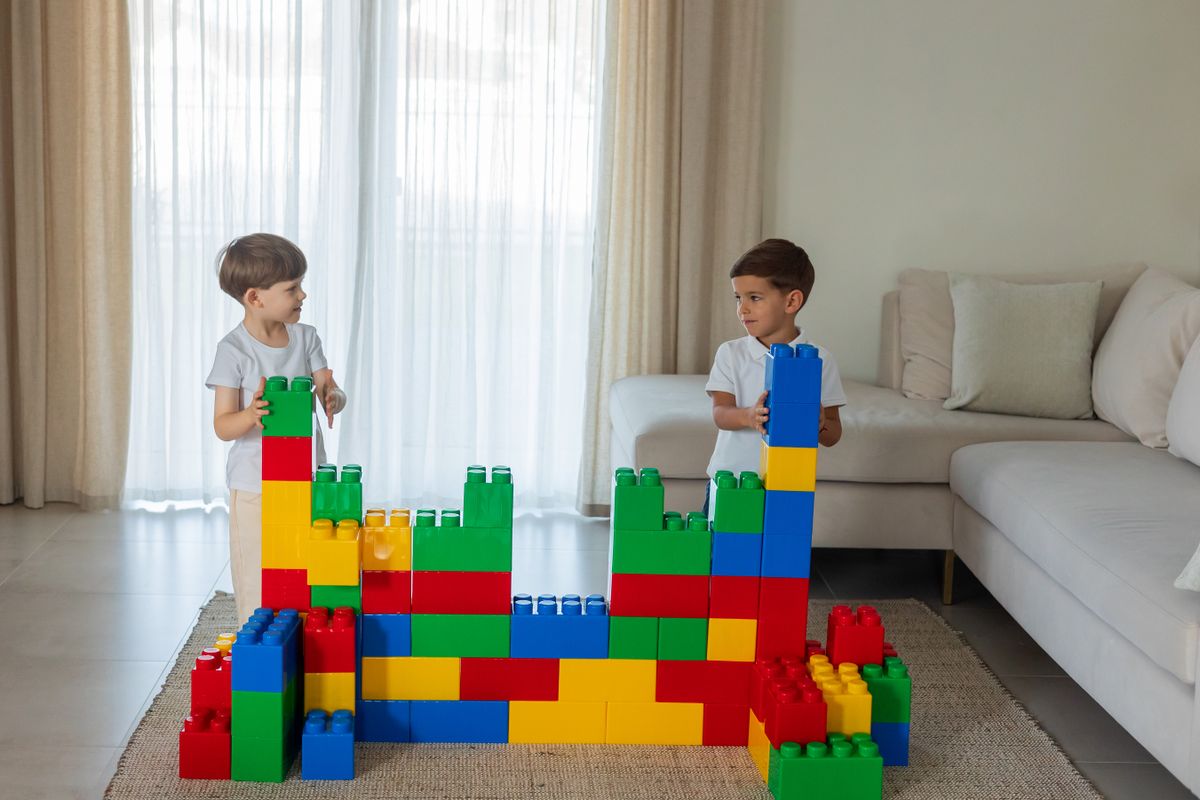
Photo by Polesie Toys on Pexels
Moving from 2D sketches to 3D structures requires a mental shift that STEM Magnetic Tiles facilitate through tactile feedback. I watched a group of five-year-olds recently attempt to build a hexagonal prism; they started by laying out a central hexagon surrounded by six squares. Somewhere around week two of having these tiles in the rotation, the children stopped building flat on the floor and started building "up." This transition is supported by the specific technical design of the tiles, which feature ultrasonic welding for durability and reinforced internal magnets that maintain a hold even when the weight of a structure increases. These tiles are specifically engineered for ages 3 to 5, providing the necessary grip strength for small hands to stabilize a vertical wall without the frustration of immediate collapse. Unlike traditional blocks that rely solely on gravity, these magnetic sets allow for cantilevered edges and complex angles that mirror the "sticks and curves" approach found in specialized geometric building sets. It turns out that when the frustration of gravity is mitigated by magnetic tension, kids are much more likely to experiment with complex polyhedrons rather than sticking to basic cubes. This makes them an ideal choice for classroom STEM kits elementary teachers prefer, as they allow for rapid prototyping of shapes that would otherwise fall apart. When students are building a kindergarten village, they aren't just playing; they are calculating the structural integrity of roofs and the perimeter of floor plans.
Expert tip: To teach the concept of surface area versus volume, have your child build a hollow cube using six square STEM Magnetic Tiles and then "unfold" it flat onto the floor to see the net of the shape. This visual representation is a foundational skill for middle school geometry, introduced through simple play.
I keep coming back to the idea that the best toys are the ones that don't give the answers away but instead provide the tools for the child to find them. By integrating these tiles into daily play, we are giving children a head start on spatial reasoning that will serve them well beyond the playroom floor.