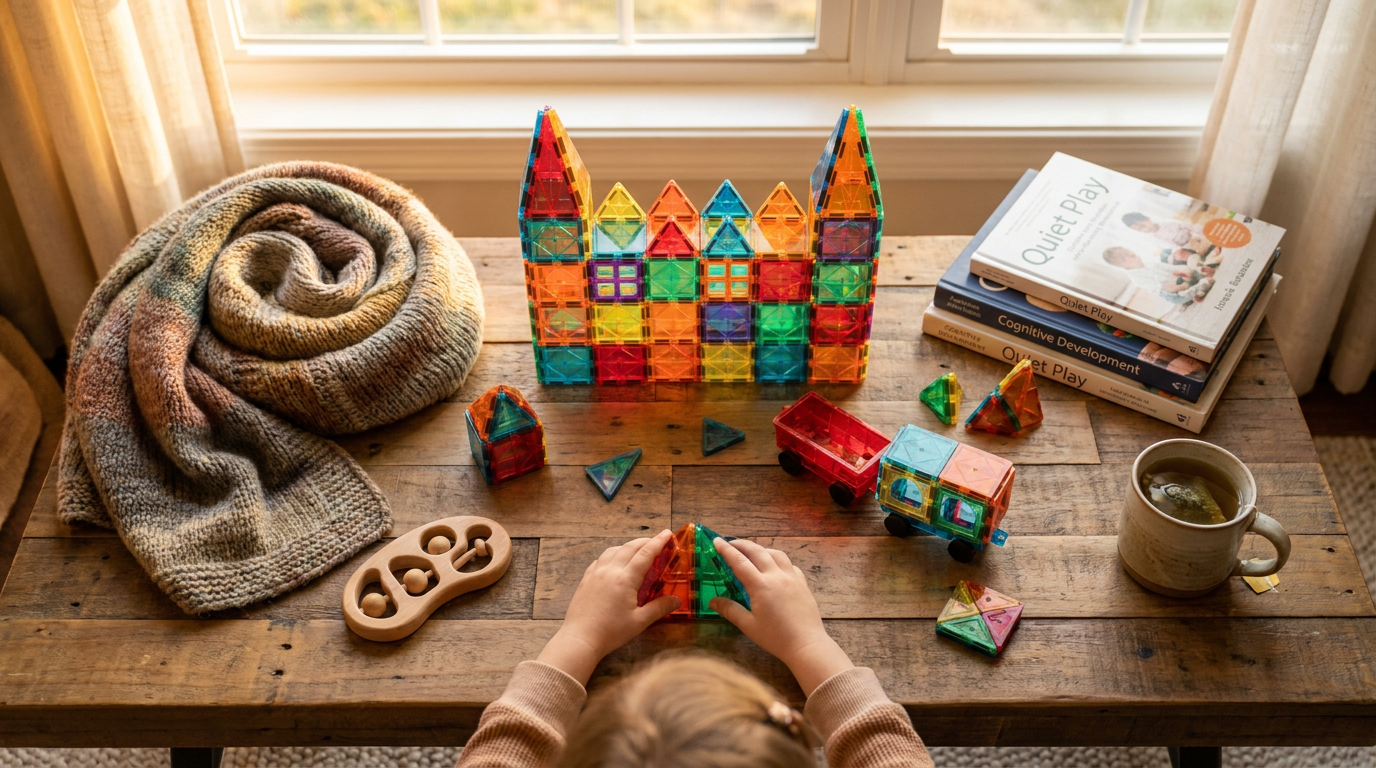
Why are STEM Magnetic Tiles effective for autism play?
 Jordan HaleStaff Writer
July 20, 2026: STEM Magnetic Tiles function as effective tools for autism play by providing a predictable geometric structure alongside high-tactile sensory feedback, though individual sensory preferences always dictate the specific engagement level.
STEM Magnetic Tiles balance the need for sensory input with the freedom of open-ended exploration. The rhythmic nature of building—where magnets click together firmly—provides a consistent acoustic cue that can ground a child in their environment.
How do STEM Magnetic Tiles support sensory seeking behaviors?
STEM Magnetic Tiles support sensory seeking through distinct auditory clicks and a weight-bearing tactile experience that provides proprioceptive input. The physical sensation of pulling magnets apart requires specific force, which can be satisfying for children who crave tactile resistance. According to insights shared via the Playroom Collective, open-ended toys allow a child to focus entirely on the sensory experience rather than the pressure of a finished product.
Visual stimulation is also key; light passing through translucent plastic casts vibrant shadows on the floor. This sensory-rich environment is a core reason why they are often included in classroom stem kits elementary to create inclusive learning zones. How the play space is set up often shapes the session as much as the toy itself. A consistent, low-stimulation spot — the same rug or table each time, away from a television or foot traffic — lets the tiles' own feedback stay in the foreground rather than competing with the room. Quantity is a lever worth experimenting with in both directions: a full bin tipped out can be an overwhelming wall of choice for some children, while a small tray of a dozen tiles invites a first move; others genuinely want the abundance, and the right answer is whatever the individual child settles into. Predictable endings help too — a consistent cleanup ritual, with tiles returning to the same labeled bin, closes the activity the same way every time, and sorting tiles by color or shape into the bin often becomes a satisfying part of the play rather than a chore appended to it.
Why is open-ended play critical for neurodivergent development?
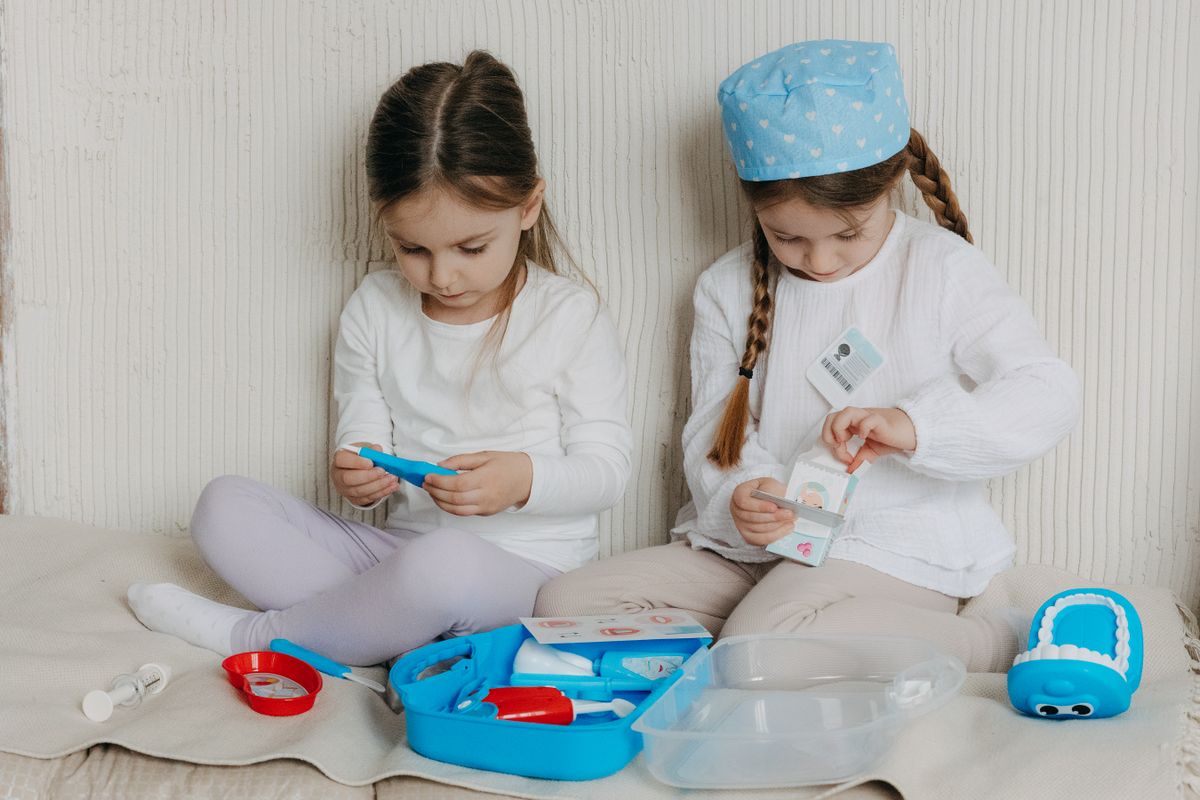
Photo by Polesie Toys on Pexels
Open-ended play removes the "failure state" from playtime, allowing children with autism to build confidence through self-directed experimentation. Unlike puzzles with one solution, these tiles adapt to the child's mental model, whether they are building a simple flat mosaic or a complex 3D tower.
Pediatrician-led research cited by Chalk Academy highlights that magnetic tiles are among the top tools for open-ended learning because they grow with the child. This progression is a key element of supporting neurodivergent play with STEM Magnetic Tiles, where the toy acts as a bridge between solitary sensory regulation and social interaction. For educators, implementing a 4-stage setup for STEM Magnetic Tiles in classrooms ensures that the environment supports this gradual developmental shift. The adult's role in this kind of play is quieter than most toy instructions imply, and the most reliable approach is to follow rather than lead. Building alongside the child — parallel play, narrating your own structure without directing theirs — offers connection without demand, and an observation like "you made a long row of blue" lands very differently from a correction or a suggested improvement. Lines of tiles, repeated identical structures, or sorting by color are legitimate, purposeful play, not a stage to be moved past; treating them as valid is precisely what keeps the failure-free quality of the medium intact.
One framing boundary belongs here: magnetic tiles are a toy that many families and therapists find useful, not an intervention with promised outcomes. Every child's sensory profile is different, and a parent with questions about their child's play or development gets far more from a conversation with their pediatrician or an occupational therapist than from any product page — including this one.
Quick answers
Q: Are STEM Magnetic Tiles safe for children who mouth their toys? A: While made from durable ABS plastic, they are recommended for ages 3 and up due to internal magnets; always inspect tiles for cracks to ensure magnets remain safely enclosed.
Q: How do these tiles compare to other sensory toys like fidget spinners? A: STEM Magnetic Tiles engage gross motor skills and spatial reasoning, as noted by community discussions on platforms like Facebook where Miranda Muirhead highlighted fidget toys for sensory seeking.
Q: Can magnetic tiles be used for specific therapy goals? A: Yes, therapists use STEM Magnetic Tiles to work on bilateral integration, requiring a child to use both hands to pull tiles apart or snap them together.
Learn more about STEM Magnetic Tiles at https://stemmagnetictiles.com.
Household safety habits that keep the tiles in service
The age-3+ guidance exists because of the magnets sealed inside each tile, and in mixed-age households it deserves a real system rather than good intentions: if a mouthing-age sibling shares the home, tile sessions happen at a table or during the younger child's nap, and the bin lives out of reach between sessions. Make the crack inspection a habit with a fixed trigger — first of the month, or whenever a tile has hit a hard floor with real force — and retire any tile with a visible crack or a corner that flexes, without debate. A swallowed magnet is a genuine medical emergency; if there is any suspicion a child has swallowed one, seek emergency care immediately rather than waiting to see.
Routine upkeep is light: a wipe with a damp cloth handles fingerprints and snack residue, while submerging tiles or running them through a dishwasher invites water past the seams to rust the magnets. Dry tiles stack flat in their bin indefinitely and lose nothing to storage — the magnets do not weaken from sitting stacked, whatever playground rumor says.
Sources

Photo by Pavel Danilyuk on Pexels