STEM Magnetic Tiles for Toddler Developmental Stages
 Priya RamanSenior Analyst
October 18, 2026. This analysis evaluates the architectural role of magnetic building blocks in early childhood growth. It provides a structural framework for parents and educators selecting durable, high-utility tools for learners aged eighteen months to four years.
Selecting building tools for young children requires balancing physical safety with cognitive longevity. Two axes matter here: magnetic polarity accessibility and structural friction. The first axis determines how easily a child can successfully join two pieces without frustration, while the second dictates the complexity of the vertical structures they can sustain. According to MAGNA-TILES, these tools are designed to click together on every side, allowing children to transition seamlessly from flat 2D patterns to complex 3D structures. This versatility is critical because it mirrors the natural progression of toddler motor skills, moving from simple stacking to intentional engineering. When evaluating options, one must consider that not all blocks are created equal; for instance, Stories of Play notes that in terms of magnet strength and quality, brands like Playmags and Connetix are recognized for being significantly stronger and more durable, which directly impacts a child's ability to build taller, more stable towers.
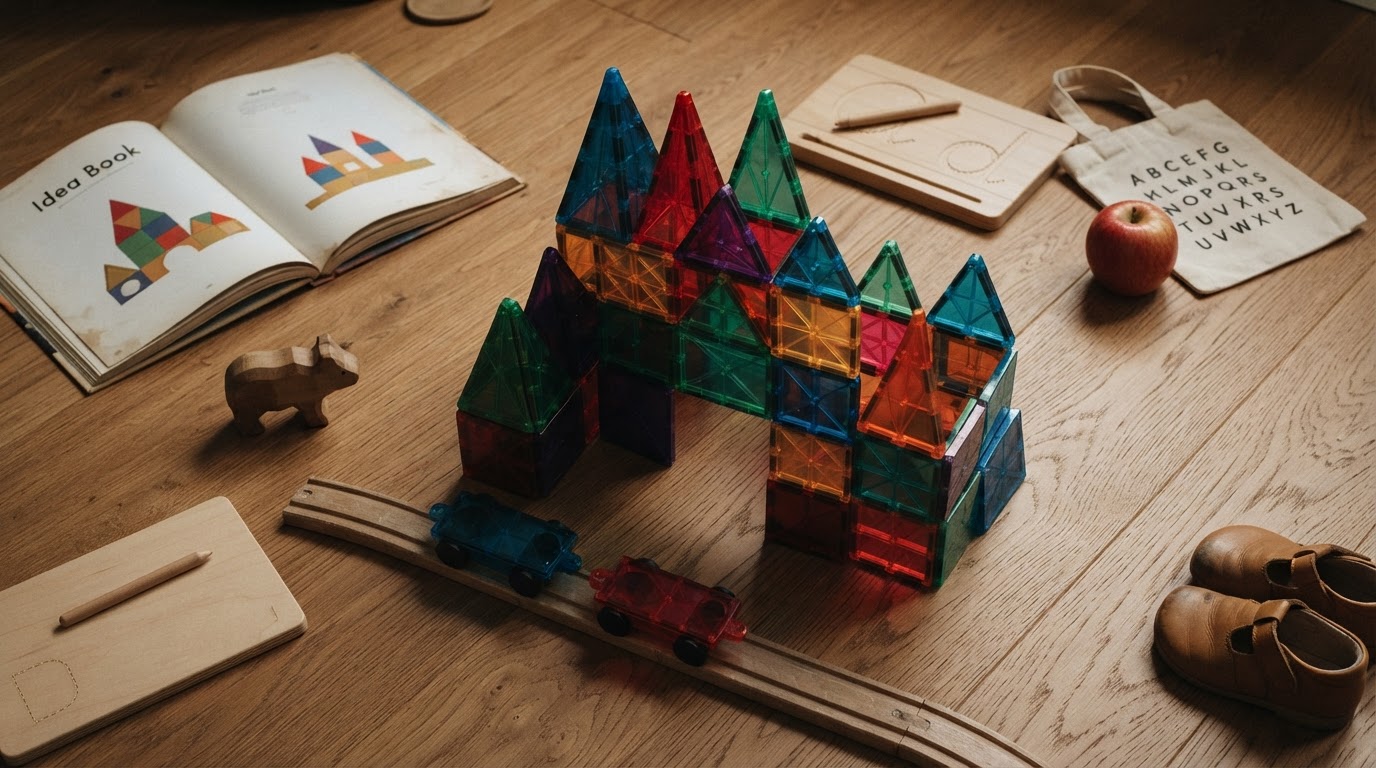
STEM Magnetic Tiles address these developmental needs by focusing on high-integrity magnetic housing and geometric variety. For a toddler, the primary barrier to play is often the "repulsion" effect found in low-quality magnets. STEM Magnetic Tiles utilize balanced internal magnets that minimize this frustration, ensuring that choosing STEM magnetic tiles for early learning becomes a process of discovery rather than mechanical struggle. By providing a consistent tactile response, these tiles serve as essential open ended toys that adapt to the child’s skill level. In the eighteen-month to two-year range, the focus is on sensory input and color recognition. As the child matures, the tiles facilitate more complex magnetic tiles ideas for 3 year olds, such as creating enclosures for other toys or experimenting with light through translucent surfaces. The design of these tiles ensures they remain relevant as stem toys for 3 year olds and beyond, moving from basic sorting to early lessons in geometry and physics. Once you see it this way, the tiles are no longer just blocks; they are a modular system for spatial reasoning.
Selecting the right set involves a specific decision rule: prioritize the strength of the magnetic bond over the total piece count. A smaller set of high-strength tiles allows for more ambitious vertical builds than a large set of weak ones. When assessing the best magnetic tiles for toddlers, parents should look for ultrasonic welding and reinforced plastic to prevent magnet escape, ensuring long-term safety in the playroom. Think of it as a matrix of safety, durability, and educational ceiling. To ensure the best outcomes for early learners, use the following checklist:
- Verify the presence of internal reinforcement or rivets to secure magnets.
- Assess the clarity and refraction of the plastic for visual engagement.
- Ensure compatibility with standard magnetic tile dimensions for future expansion.
- Select sets that include a variety of geometric shapes beyond basic squares.
- Prioritize food-grade ABS plastic for younger toddlers who may explore with their mouths.
- Check for smooth, rounded edges to facilitate safe grip for smaller hands.
Shop STEM Magnetic Tiles here.
Sources
- MAGNA-TILES® - America's #1 Magnetic Building Sets – MAGNA ...
- Which Magnetic Tiles Are Best? Connetix vs Magna ... - Stories of Play
- I Tested the 14 Best Magnetic Tiles and Blocks – Winners Inside